A modern railway is a distributed, safety-critical computer laid out along hundreds of kilometres of track, and almost every safety decision - whether a section is occupied, which aspect a signal may show, what movement authority a controlled balise transmits - is made by lineside electronics that cannot simply stop when the public power supply flickers. This first paper on nickel-metal hydride backup power for railway signalling explains the working principle and load profile of the equipment a wayside battery must actually support. It begins with a distinction that is often missed: a fixed Eurobalise is a passive transponder that carries no battery and is energised only by the passing train's Balise Transmission Module (BTM) antenna, whereas a controlled (switchable) balise is continuously driven by a Lineside Electronic Unit (LEU) that converts real-time signal aspects into telegrams and therefore requires a permanent, backed-up supply. Around the LEU sit axle-counter evaluators that determine section occupation, electronic interlockings that enforce routes, train-detection and point-detection circuits, and level-crossing controllers. The paper maps these loads onto the European safety architecture defined by EN 50126 (RAMS), EN 50128 (software) and EN 50129 (safety-related electronic systems for signalling), with the ERTMS/ETCS Eurobalise interface specified in UNISIG SUBSET-036 and the control-command and signalling Technical Specifications for Interoperability. It then develops the characteristic backup duty - a long, low-power standby with defined short peaks during train passage, point operation or crossing activation - and explains why the battery is sized not to a generic runtime but to the infrastructure manager's documented time-to-restore the mains, with autonomy requirements commonly set in the range of a few hours for interlockings and level crossings and longer for remote nodes, values presented here as engineering practice rather than a single universal mandate.
Trackside equipment divides cleanly into passive and powered elements. The fixed Eurobalise described in SUBSET-036 is passive: installed between the sleepers, it needs no electric supply because the onboard BTM antenna energises it by magnetic induction as the train passes and it answers with a stored telegram. A controlled balise, by contrast, is wired to an LEU that continually updates the telegram to reflect the current signal aspect, speed restriction or route; if the LEU loses power the controlled balise can no longer report a changeable aspect, which is why the LEU and its signalling source are the items that need backup.
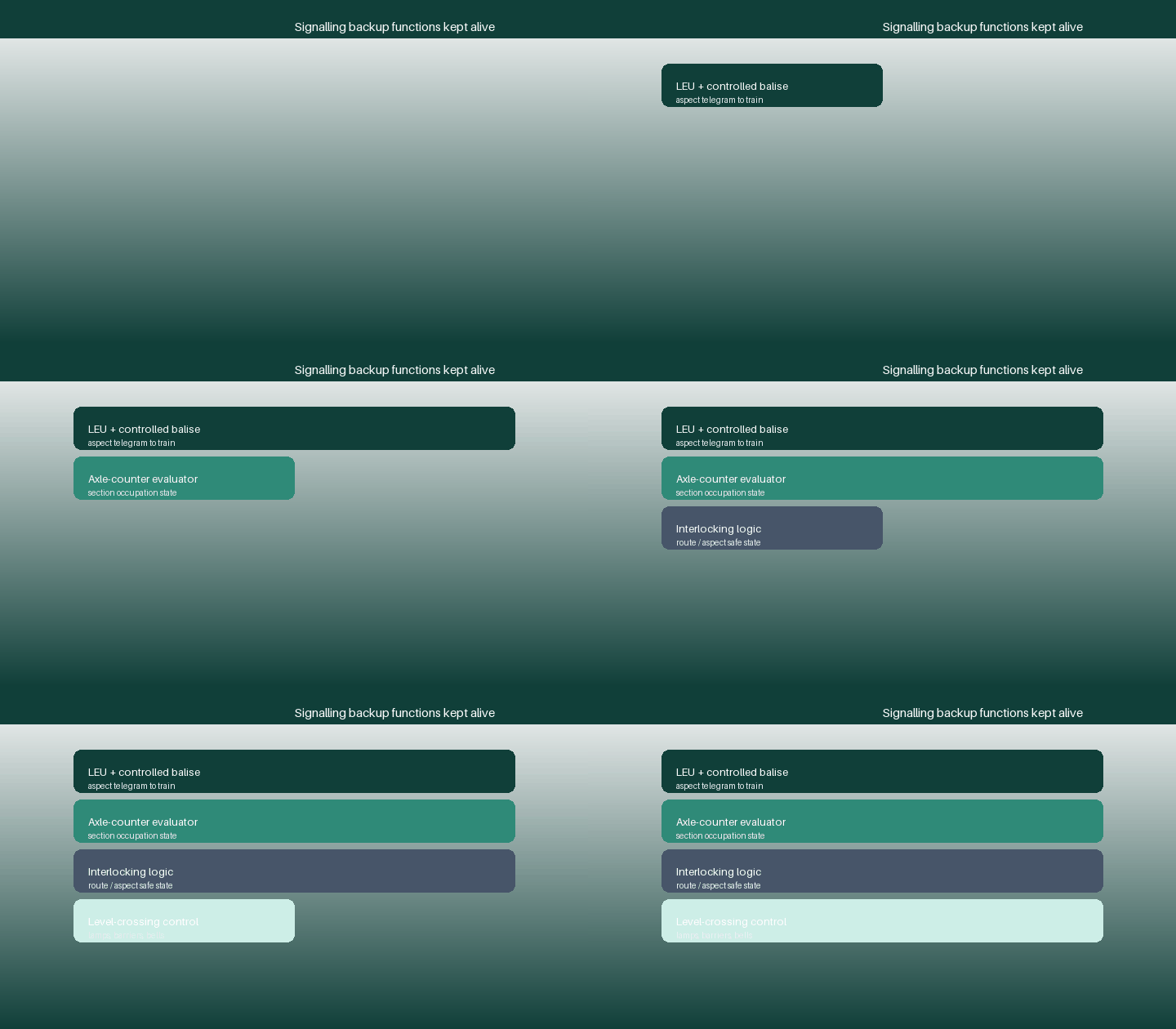
Beyond the LEU, the powered wayside family includes axle-counter evaluators and their rail-side wheel detectors, which establish whether a track section is occupied or clear; electronic interlocking controllers that hold routes and signal aspects; track circuits or other train-detection systems; point (switch) machines and their detection contacts; and active level-crossing controllers with their warning lights, barriers and bells. Each has a different current signature, and the backup battery must support the defined safe subset of these functions for a defined autonomy window.
Railway signalling is built to the CENELEC safety trio. EN 50126 specifies reliability, availability, maintainability and safety (RAMS) and the process that derives a safety integrity requirement; EN 50128 covers software for railway control and protection systems; and EN 50129 sets requirements for safety-related electronic systems for signalling, including the hardware, the fault behaviour and the safety case that lets a system carry a defined SIL. The Eurobalise/LEU functions and axle-counter train-detection interfaces are in turn constrained by the control-command and signalling TSI (EU Regulation 2016/919).
For the power supply this has a direct consequence: losing the mains is a foreseen external event, and the system's response must be deterministic. The backup source does not need to keep every convenience feature alive, but it must keep the safety-related functions operating - or drive the controlled equipment to a safe state - for the documented autonomy, and it must do so after long periods idle, in an unheated outdoor cabinet, without maintenance visits. That combination of long idle life, finite but guaranteed autonomy and safety-case traceability shapes the battery choice as much as the electrical load does.
An LEU is a low-power industrial controller: a processor, communication interfaces to the interlocking, and the up-link electronics that drive the controlled balise through a long cable (the data telegram and the energising signal coexisting on the balise line). Its current is dominated by a near-continuous quiescent draw with small telemetry and communication bursts, rising only when the aspect changes or a train is in the vicinity. A single LEU/balise channel is therefore undemanding in watts, but a typical site groups several channels, an evaluator and communications in one cabinet, so the backed-up bus feeds a small but always-on cluster.
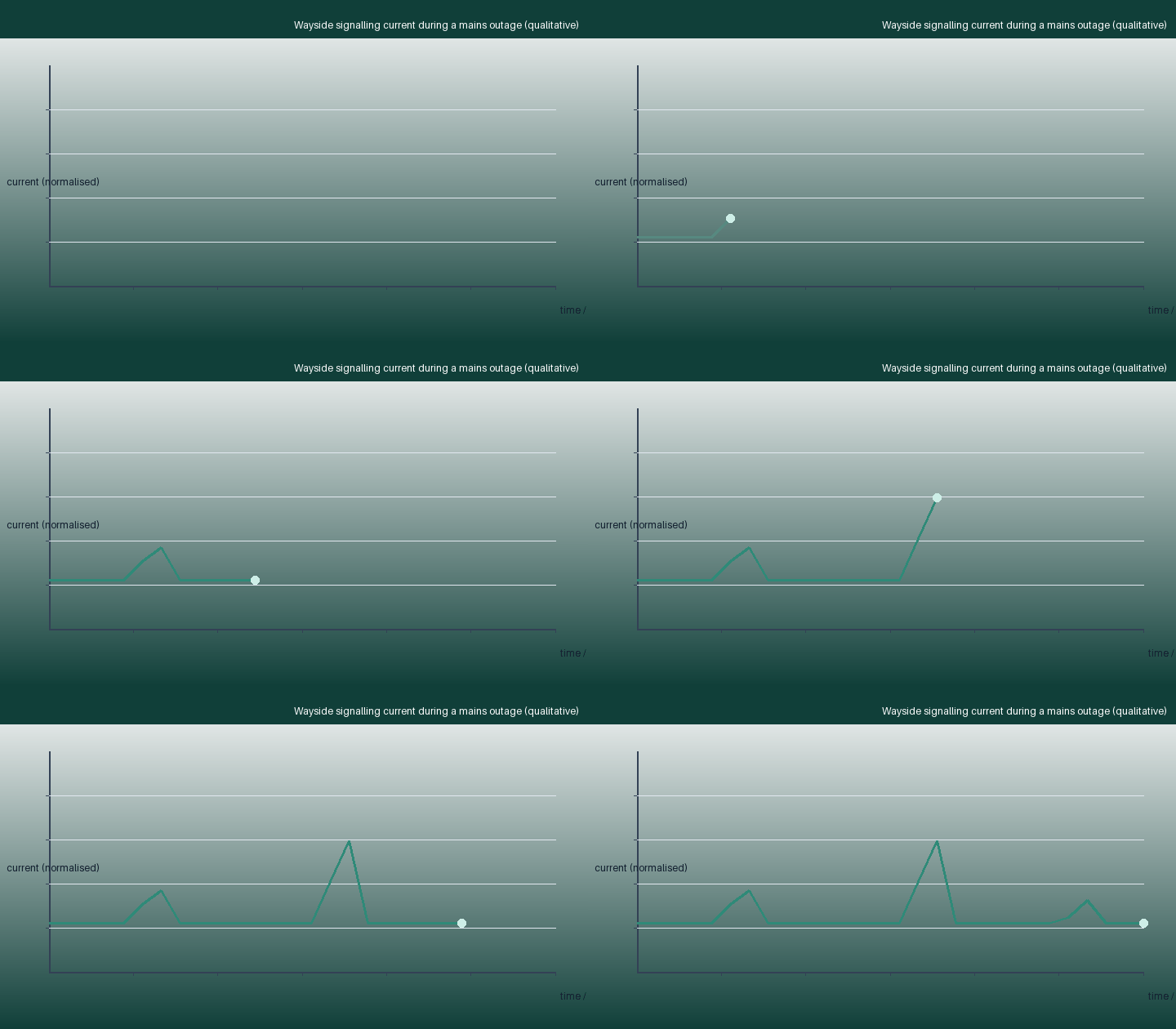
The first animated figure traces a representative wayside current over a backup period - a flat quiescent baseline for the LEU and evaluator, brief peaks as a train passes and the balise is read, and a larger but short event if a point machine or crossing is part of the backed load. The profile is deliberately the opposite of a traction battery: almost no energy is moved for most of the time, which puts a premium on low self-discharge and on the ability to deliver the occasional peak without voltage collapse.
An axle-counter system pairs wheel detectors at the boundaries of a section with an evaluator that counts axles in and out and declares the section clear only when the counts match. The evaluator and detectors draw little continuous current but must not reset during a mains interruption, because a reset forces a deliberate, procedure-controlled restoration of the section. The interlocking is the safety authority of the area, holding route and aspect logic; where it is backed up, its power supply must be clean and uninterruptible so the safe state is maintained rather than re-derived from a cold start.
Level crossings present the most demanding mixed load: steady controller and indicator current plus periodic high-current events for barrier drives, warning lamps and bells. Crossing autonomy is therefore specified around a realistic number of activation cycles during the worst-case mains outage, not merely standby current. Across all these loads the battery sees a duty that is mostly trickle-like with a small number of defined pulses - a profile well matched to a chemistry with a flat discharge voltage, good pulse capability and very low idle losses.
Backup autonomy is an engineering requirement set by the operator's restoration plan and the line's traffic risk. Industry practice for wayside signalling commonly places interlocking and level-crossing backup in the order of a few hours, with remote trackside nodes on long sections sometimes specified for substantially longer; these figures are planning ranges from suppliers and operators, not a single clause, and the correct value is always the infrastructure manager's documented time-to-restore plus a margin. The battery is then derated for the real cabinet climate, which can swing from well below freezing in winter to solar-heated highs in summer, and for ageing to the end of the rated life.
Sealed nickel-metal hydride cells are relevant here because they combine a flat nominal 1.2 V discharge, good low-temperature delivery relative to their capacity, no liquid electrolyte to top up or spill in a sealed outdoor cabinet, and no heavy-metal cadmium; the second paper develops the pack sizing and compares NiMH honestly with vented nickel-cadmium (the traditional railway chemistry), valve-regulated lead-acid and lithium-ion.
The analysis yields a concrete requirement: a sealed, maintenance-minimum battery string and charger arranged to hold the safety-related bus for the full documented autonomy at end of life and at cabinet temperature extremes; enough peak-current capability for the defined crossing or point events without sagging below the electronics' cut-out; supervision that logs mains loss, battery voltage and autonomy used; and construction that survives vibration, humidity and long float/standby service. The pack and its cells must be traceable to recognised battery standards and supported by the safety documentation the EN 50129 case requires.
The following two papers turn this requirement into hardware: the second sizes a sealed NiMH wayside pack and places it against NiCd, lead-acid and lithium alternatives, while the third maps the qualification campaign - environmental, EMC under EN 50121, battery standards and the evidence a signalling integrator must place in the safety file.
Weijiang Power designs and manufactures sealed nickel-metal hydride cells and matched industrial packs for remote, off-grid and safety-related equipment, and supports OEM partners with IEC 61951-2 performance files, IEC 62133-2 safety evidence, pulse-load characterisation, wide-temperature testing and charger/pack co-validation. Tell us your duty cycle, peak current, temperature envelope, autonomy target and the standards your product must meet, and our engineers will specify a cell-and-pack combination that protects runtime, reliability and service life. Review the range on the products page.


