A multi-parameter patient monitor never truly rests: ECG front-ends sample continuously, pulse oximetry emits and detects light many times per second, and an NIBP pump inflates a cuff on a schedule. Its internal battery must carry uninterrupted monitoring through intra-hospital transport, imaging transfers and mains failure. This paper — Paper A of a three-part series on monitor batteries — decomposes that load, anchors it to published manufacturer data, and shows how to convert a clinical runtime claim into a current budget. The governing particular standard is IEC 60601-2-27 for ECG monitoring equipment.
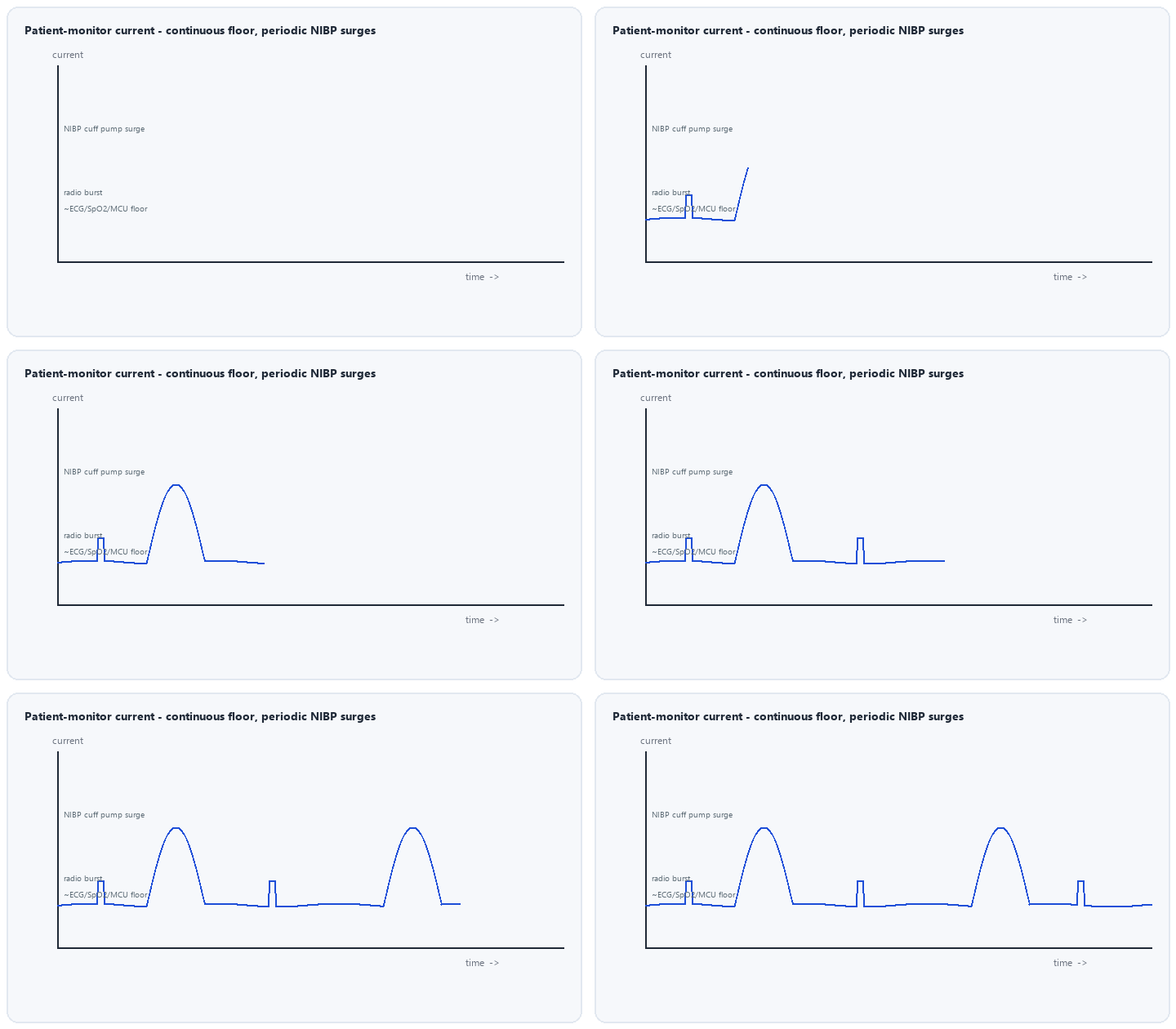
A bedside or transport monitor combines: (1) a continuous low-power floor — ECG/respiration front-end, SpO2 acquisition, MCU and memory; (2) a display and backlight that dominates average power at high brightness; (3) periodic high-current events — the NIBP compressor that inflates the cuff, thermal recorder printing, and audible alarms; and (4) wireless modules (Wi-Fi/telemetry) that transmit in bursts. The NIBP motor is the signature event: a tens-of-seconds current surge repeated every 5, 10 or 15 minutes, which is why every credible runtime specification states the NIBP interval — Philips, for example, quotes its Efficia CM100's up-to-9-hour battery life specifically with ECG, SpO2 and NBP measured at 15-minute intervals.
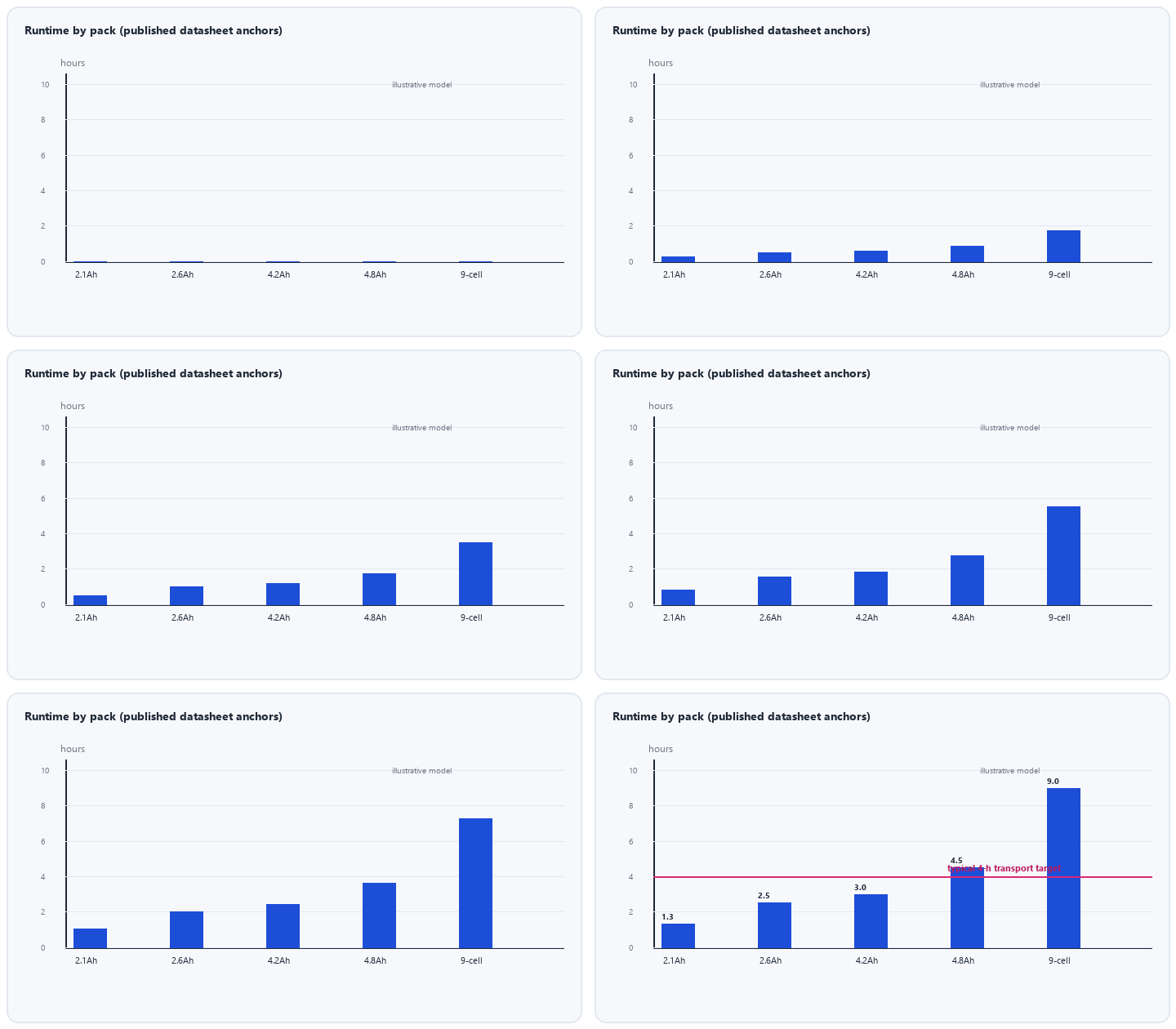
Published specifications let an engineer bracket the problem. Multi-parameter monitors commonly use 10.8–14.8 V packs: a 2600 mAh pack delivers roughly 2–3 hours and a 4800 mAh pack 4–5 hours; modular platforms around 8 W typical consumption quote about 8 hours; compact transport monitors such as the Edan iM8 specify at least 80 minutes from 2.1 Ah and 180 minutes from 4.2 Ah, with charge times of 180 and 360 minutes respectively. The pattern is consistent: runtime scales with capacity, but the stated configuration (modules attached, NIBP interval, recorder use, brightness) moves the answer by tens of percent.
IEC 60601-2-27 (and its national adoptions such as GB 9706.25) imposes a specific obligation for internally powered equipment: the manufacturer must publish the minimum operating time with a new, fully charged battery, and — for rechargeable batteries — the time to charge to 90 % under normal use, plus concrete advice on when the battery must be replaced. This is why a serious design does not quote a single optimistic number: it defines a reference configuration, measures minimum runtime at that configuration, and reserves margin to the low-battery alarm.
Sum the loads by duty cycle rather than nameplate: integrate the continuous floor over the mission, multiply display current by the real (often idle-dimmed) backlight duty, add each NIBP cycle's energy (surge current × inflation seconds × cycles per hour), and budget recorder and radio bursts. The pack must hold its rail through the NIBP inrush — a high internal-resistance, aged pack sags during cuff inflation and can reset the monitor precisely when a pressure reading is due. End-of-life (80 % capacity) and cool-corridor derating are applied last.
NiMH's flat 1.2 V curve rides through repeated pump surges without a BMS fighting to hold a narrow voltage window; its aqueous chemistry is intrinsically safe beside the bed; and it tolerates the dock-after-use shallow cycling of fleet equipment. Nickel-metal hydride packs remain a proven choice for cost-sensitive and rugged transport monitors where lithium's energy-density advantage is not decisive. Paper B compares chemistries and sizes the pack; Paper C covers IEC 60601-1, IEC 62133 and the runtime validation matrix.
Weijiang Power supplies matched NiMH cells and custom packs for patient-monitor OEMs — low internal-resistance binning for NIBP surge tolerance, welded interconnects, NTC supervision and IEC 62133-1/UN 38.3 documentation. Send your measured current trace, NIBP interval and target minimum runtime, and we will size a pack to your declared IEC 60601-2-27 configuration.


