At sea there is no grid to reconnect and no roadside to pull onto, so a ship carries its own layered electrical safety net, and batteries are the final layer. This paper explains the working principle and load profile of the power that must survive a total blackout, distinguishing the three separate sources that SOLAS requires. The main generating plant supplies normal power; an emergency source - typically an emergency generator with a transitional battery-backed source - must supply defined emergency loads for 18 hours on a cargo ship and 36 hours on a passenger ship under SOLAS Chapter II-1, including emergency lighting along escape routes and at embarkation stations, navigation lights and the lights required by the collision regulations, internal communications and shipborne navigational equipment; and independently of both main and emergency sources, SOLAS Chapter IV regulation 13 requires a reserve source or sources of energy dedicated to the radio installations, capable of simultaneously operating the VHF radio and, as appropriate to the ship's sea area, the MF, MF/HF or Inmarsat/satellite equipment for distress, urgency and safety communications when both other sources fail - the classic GMDSS reserve battery, with a minimum endurance expressed in hours and configured under IMO guidance (resolutions A.694(17) and A.702(17)) and flag-state rules such as US 47 CFR 80 subpart W. The paper develops the load profile of each layer: the long, low emergency-lighting and navigation night; the short, high-value radio distress hour; and the transitional source that bridges the generator's start. It is precise about scope: the handheld two-way VHF radios carried in survival craft are separately required (for units installed after 23 November 1996) to use primary batteries, a rule sealed rechargeable cells cannot replace - but sealed nickel-metal hydride has a legitimate and growing role in ship-installed reserve modules, LED emergency lighting, transitional sources and onboard rechargeable equipment, where its sealed construction, long charge retention and absence of acid watering and gas ventilation burden are valuable.
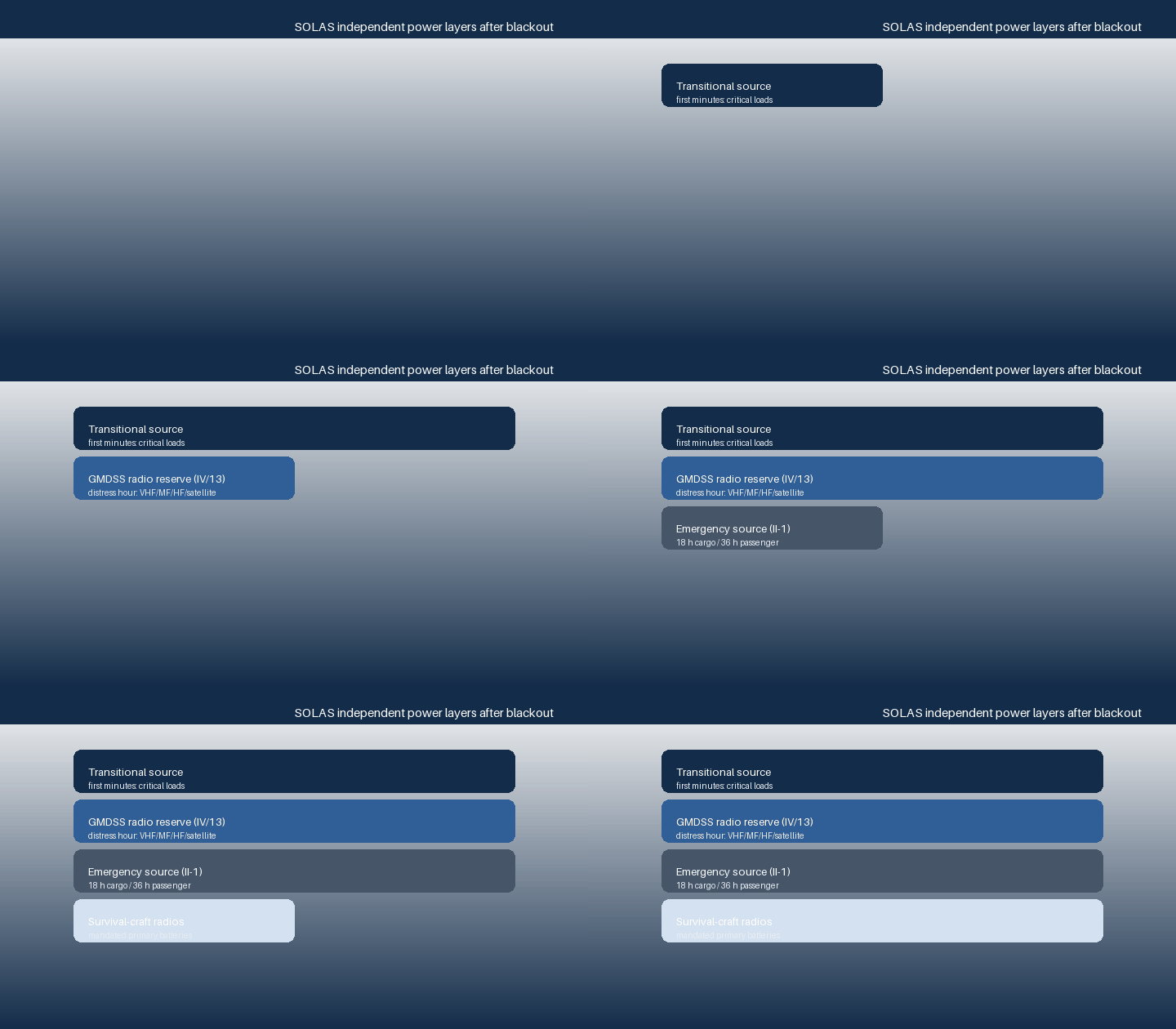
SOLAS separates sources by function and by independence so that a single fire or flooding casualty cannot remove all power. The emergency source under Chapter II-1, with its emergency switchboard physically separated from the main machinery space, feeds the emergency loads for 18 hours (cargo) or 36 hours (passenger); a transitional source of power, usually batteries, supplies the loads the emergency generator cannot pick up instantly during the first minutes.
Independently, Chapter IV regulation 13 requires a reserve source of energy for radio that works even if both main and emergency power are lost, because distress communications must not depend on the same casualty-prone systems. The first animated figure maps these layers and their endurance. This independence is the key concept for battery selection: the radio reserve is not a tap off the emergency board but a dedicated, automatically connected source sized to the radio load alone.
The emergency switchboard feeds a defined list: emergency lighting along escape routes, in alleyways, stairways, exits and at embarkation and survival-craft stations; the navigation lights and other lights required by the Regulations for Preventing Collisions at Sea; internal communication equipment, the shipborne navigational equipment and certain bridge and chart-room supplies needed in an emergency; and fire-detection, alarm and selected pump and control circuits. The load is relatively steady and low compared with propulsion but must be sustained for the full 18/36 hours.
The transition to LED lighting has materially reduced this energy, making compact battery reserve modules more capable and improving the case for sealed chemistries in distributed emergency-light fittings and local reserve packs. The profile is essentially a long, flat, low-current discharge with small peaks from lamp switching, alarm panels and communication keying - a duty that rewards high energy retention and a stable voltage rather than high peak power.
The Chapter IV/13 reserve source must simultaneously power the VHF installation and the sea-area-appropriate MF, MF/HF or satellite earth station for distress, urgency and safety traffic, and it must charge the radio's own final batteries where required. Endurance is specified by regulation and flag-state implementation (commonly expressed as a minimum of one hour for the defined radio load, with longer requirements in some configurations and for ships without an emergency generator), and the source must be independent, automatically connected on loss of other supplies, and protected against unauthorised use for non-radio loads.
The radio load is intermittent: receivers and watchkeeping draw a modest baseline, with transmit keying producing short high-current peaks at VHF (156 MHz) and especially MF/HF. The reserve battery is sized to the simultaneous worst-case radio configuration at the nominal voltage (commonly 24 V), held fully charged and isolated from other loads. IMO guidance and classification rules govern its capacity calculation, charging arrangement, location and the low-charge and failure alarms that prove it is always ready.
Because an emergency generator takes time to start and come online, SOLAS requires a transitional source to cover the immediate minutes - supplying critical lighting and controls that cannot wait, and in some arrangements contributing to reliable generator starting. These batteries see a short, high-integrity duty: instant availability after long idle, a few minutes of support, then recharge; they are frequently located close to the emergency switchboard and must start the engine or feed the inverter without hesitation in a cold, hot or humid engine-room-adjacent space.
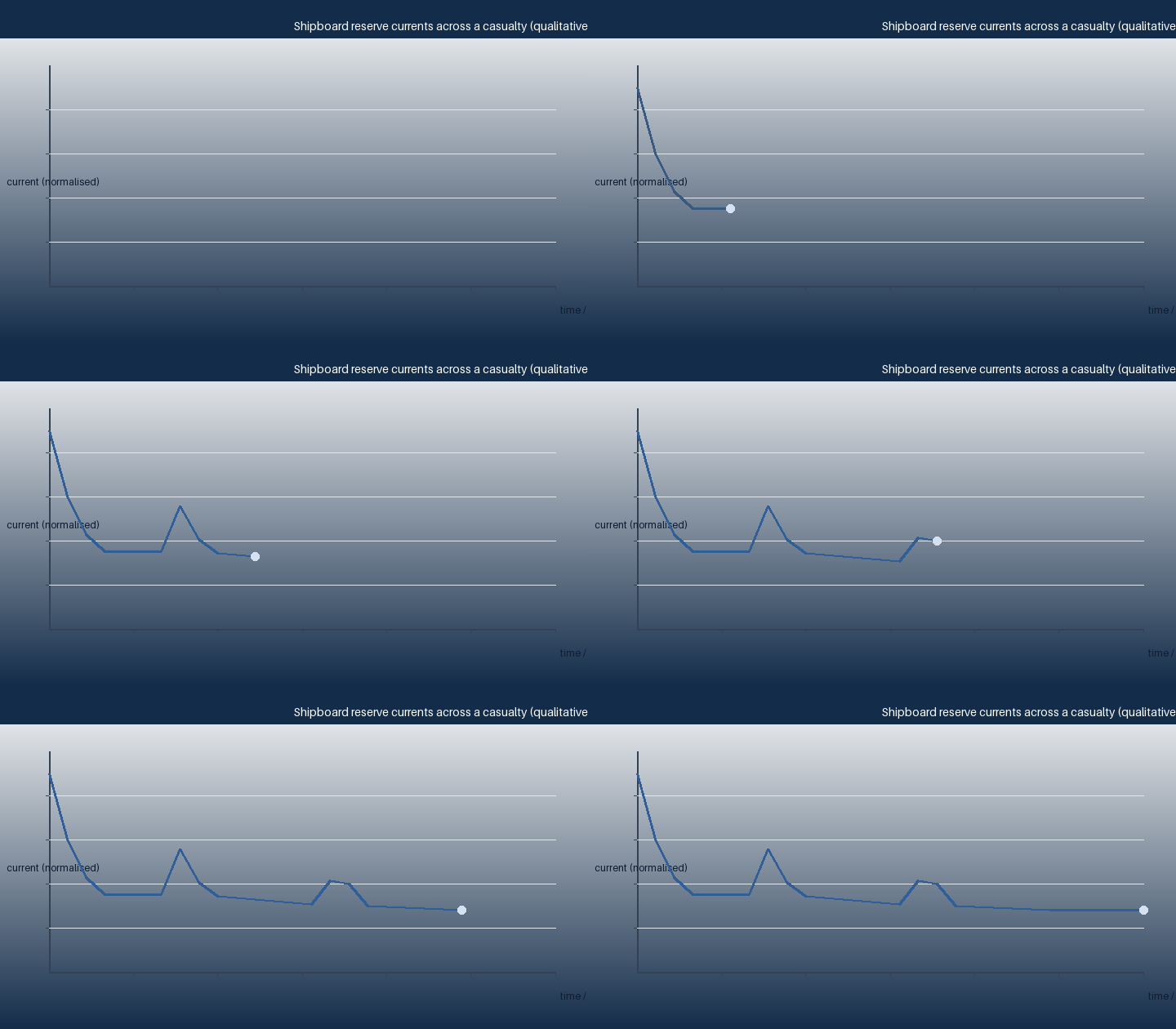
The second animated figure contrasts the three time scales - seconds of transition, the radio distress hour, and the 18/36-hour emergency night. Each makes a different demand: peak current and instant readiness for transition, clean stable voltage for the radio hour, and sustained capacity and charge retention for the long emergency load.
Shipboard batteries face continuous vibration and shock from engines and waves, rolling and pitching (equipment must function at defined angles of heel and trim), high humidity and salt-laden corrosive air, and wide temperature ranges. The marine electrical installation standards of the IEC 60092 series, the electromagnetic-compatibility standard IEC 60533 for ships, and IEC 60945 for maritime navigation and radio equipment (environmental protection and EMC) frame the design and test environment; equipment for wheel-marked items is approved under the EU Marine Equipment Directive (MED, Directive 2014/90/EU).
Traditional large emergency and radio-reserve banks are flooded lead-acid or nickel-cadmium, which implies dedicated battery rooms or lockers, forced ventilation for evolved hydrogen, corrosion-resistant construction, electrolyte maintenance and spill containment. Sealed NiMH modules remove watering, free electrolyte and much of the gas-ventilation burden and tolerate the shallow reserve duty and vibration well, making them attractive for distributed and smaller reserve applications - subject to the type-approval scope discussed in the certification paper.
Sealed NiMH is a strong candidate for ship-installed applications: transitional and local reserve modules, sealed GMDSS radio-reserve packs where accepted by the flag and classification society, battery-backed LED emergency-lighting and escape-way fittings, bridge and alarm backup, and rechargeable onboard equipment. Its long shelf charge retention suits a source that may never be used but must be instantly ready, and its sealed, cadmium-free construction simplifies installation and maintenance on a crewed vessel.
It is essential to be precise about the boundary: SOLAS and the GMDSS performance standards require the survival-craft two-way VHF radiotelephones (units installed after 23 November 1996) to be powered by primary batteries, with older rechargeable-fitted sets also carrying a primary spare of at least two years' shelf life; EPIRBs and some survivor lights are likewise primary-battery devices with multi-year standby. NiMH does not replace those mandated primaries. The next paper sizes the legitimate shipboard reserve applications and compares chemistries against the SOLAS/IEC requirements.
Weijiang Power designs and manufactures sealed nickel-metal hydride cells and matched industrial packs for remote, off-grid and safety-related equipment, and supports OEM partners with IEC 61951-2 performance files, IEC 62133-2 safety evidence, pulse-load characterisation, wide-temperature testing and charger/pack co-validation. Tell us your duty cycle, peak current, temperature envelope, autonomy target and the standards your product must meet, and our engineers will specify a cell-and-pack combination that protects runtime, reliability and service life. Review the range on the products page.


