Certifying backup power for platform screen doors and fare gates is fundamentally a functional-safety activity: the evidence must show that, on any credible power-loss scenario, passengers can always leave the platform and pass through the gates, and that the powered backup behaves predictably whether or not it is still healthy. This final paper maps the qualification campaign for sealed nickel-metal hydride modules in PSD and AFC equipment. It begins with the functional standards - ISO 18298 for platform barrier systems (covering passenger doors, emergency doors, driver access and extremity doors, the trackside emergency egress device, and the management of barrier-specific safety risks) and EN 14752 for the train bodyside doors that must align with them, including each door's emergency egress device - and shows how the battery and charger enter the hazard analysis as elements supporting the emergency-opening and safe-state functions. It then layers the station-level qualification: electromagnetic compatibility with signalling, communications and contactless readers; climate, humidity, dust, vibration and shock appropriate to under-platform and concourse locations; high-cycle and endurance testing of mechanisms together with their backup; and explicit fail-safe tests that remove power at the worst point of a door or gate cycle and verify unconditional egress. The battery carries its own dossier - IEC 61951-2 performance and IEC 62133-2 safety for sealed NiMH cells, UN 38.3 for transport, plus charge-retention and float-life evidence that proves readiness after long idle. The paper explains how these are combined into the system safety case accepted by a transit authority, and why construction consistency and traceability matter across fleets of hundreds of door units and gate lanes.
ISO 18298 (developed from prEN 17168) defines requirements for platform barrier systems - the fixed structure, movable passenger doors and gates, emergency doors, driver access doors and platform extremity doors - together with the emergency egress device for manual trackside opening and the management of the particular safety risks of barriers at the platform edge. EN 14752 governs rolling-stock bodyside entrance systems and requires an emergency egress device on each passenger door. Together they define the evacuation behaviour the power system must support.
The hazard analysis identifies power loss, controller failure, battery depletion and mechanism obstruction as initiating events, and sets requirements that the egress path opens unconditionally - mechanically if necessary - while powered backup provides controlled cycles and indication. The battery's required actions, number of cycles, response time and safe behaviour on its own failure become traceable safety requirements, supported where applicable by generic functional-safety methods (the EN 50126/50128/50129 logic is often borrowed in rail transit projects, with IEC 61508 as the generic basis).
The decisive tests are adversarial. Power is removed at every critical point of a door and gate cycle - mid-open, mid-close, fully closed, during obstacle re-open and during a transaction - and the system must reach the safe state within the specified time: barriers release or become manually openable with defined force, emergency doors and breakout panels function, and no passenger can be trapped on the track side. These tests are repeated with the battery at end-of-life capacity, at minimum temperature and after the maximum idle interval to ensure the safe state does not depend on a fresh, warm pack.
Crucially, the tests also remove the battery itself to prove the mechanical or capacitive ultimate fail-safe still opens the egress path - the layered design principle that passengers are never reliant on battery health for escape. Gate tests confirm the flap or wing retracts and the lane opens on fire-alarm dry contact as well as mains loss, and that the audit record survives.
PSD and AFC equipment sits in a dense electromagnetic environment: traction currents and rail potential, signalling and train-to-wayside radio, contactless ticketing readers operating at 13.56 MHz under ISO/IEC 14443, passenger Wi-Fi and mobile networks. Station EMC qualification (drawing on the EN 50121 railway series and generic standards) verifies that the charger and battery module do not conduct or radiate noise that could disturb readers or signalling, and that they remain immune to the station environment.
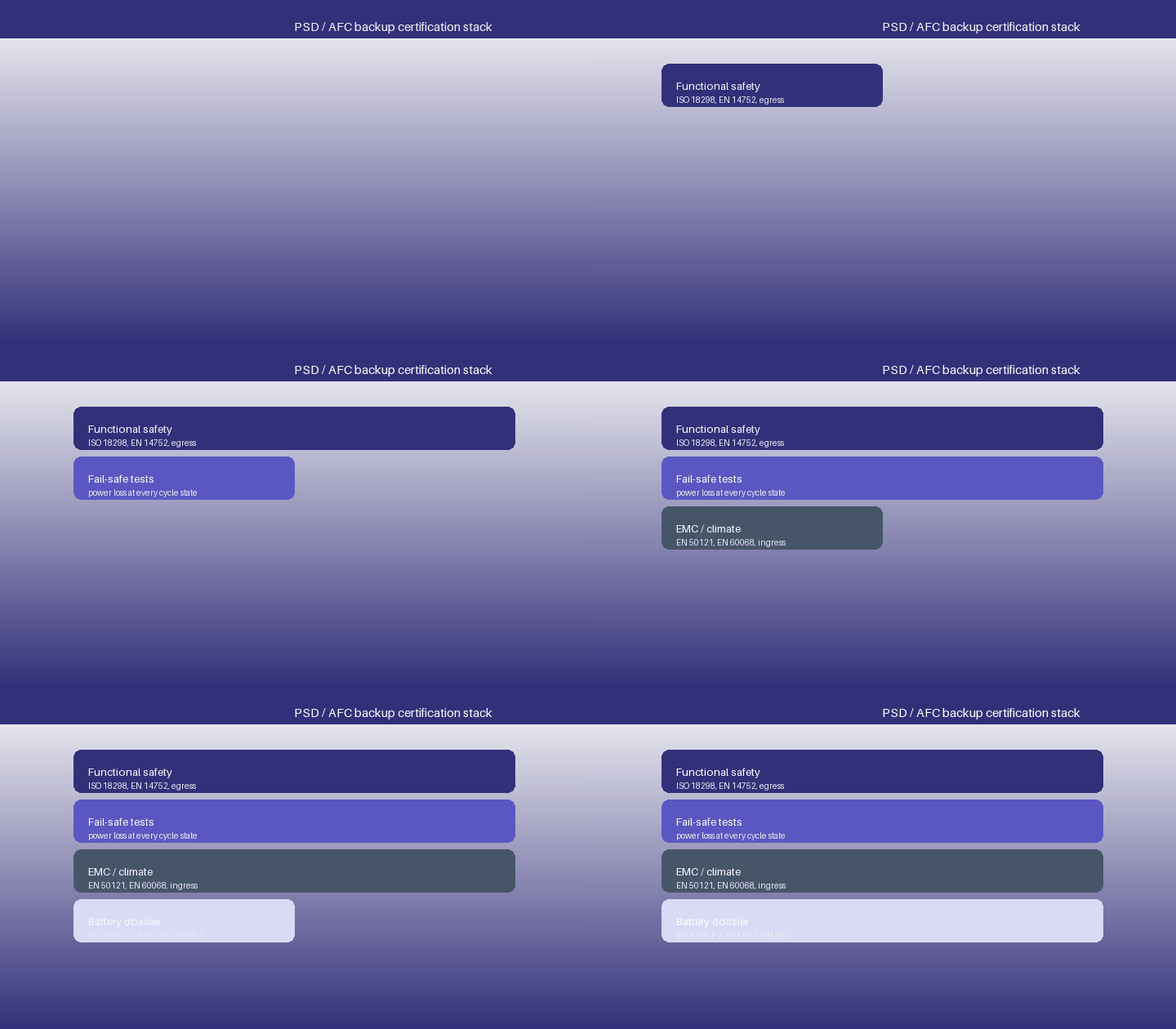
The first animated figure layers the compliance stack. The passive NiMH reservoir is benign; as elsewhere, the charger carries the emissions design effort, with filtering and layout verified in the final cabinet or pillar arrangement rather than only on the bench. Reader reliability - every card tap must still be recognised during charging or backup mode - is a practical acceptance test.
Under-platform PSD cabinets see wide temperature swings, dust, moisture from train-borne rain and wash-down, and continuous vibration and pressure pulses from passing trains; gate pillars face concourse temperatures, spills and high mechanical usage. Qualification applies EN 60068-type dry/damp heat and cold tests, thermal cycling, ingress and corrosion checks, and vibration/shock representative of the location, with the battery electrically active.
Endurance testing combines the mechanism's very high open/close cycle count with repeated backup activations, demonstrating that the sealed NiMH module retains its emergency capability after float ageing and many self-tests, and that connectors and cell retention survive the platform vibration environment. Cold emergency-cycle tests are the critical battery demonstration - the doors must still complete their defined cycles at the lowest credible station temperature on aged cells.
The cells and modules are supported by IEC 61951-2 (performance: capacity, internal resistance, charge retention, endurance) and IEC 62133-2 (safety under intended use and foreseeable misuse), with UN 38.3 for transport; sealed, non-lithium NiMH is comparatively straightforward to ship for site replacement. The project dossier adds application-specific evidence: measured emergency-cycle capability cold and at end of life, float/charge-retention data over the maximum standby interval, abuse and external-short behaviour, and the supervision/self-test specification.
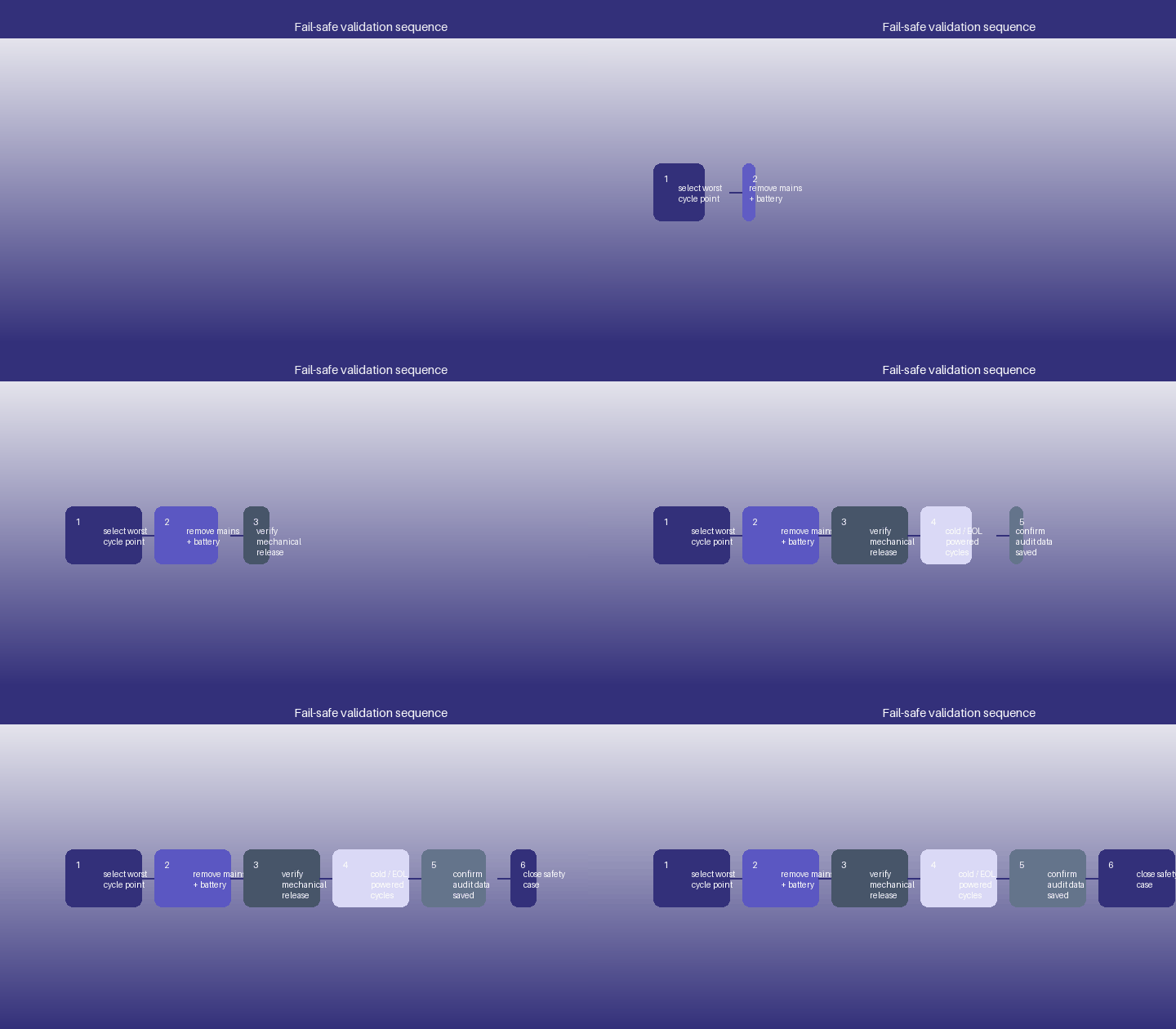
The second animated figure sequences the dossier. Construction consistency is enforced across the fleet - identical cell type, fusing, welding and enclosure, with lot traceability - because a transit authority may deploy the same module across thousands of doors and lanes, and any unqualified substitution changes the fail-safe behaviour the safety case relies on.
System acceptance combines the functional-safety case (ISO 18298/EN 14752 egress behaviour), the fail-safe tests, EMC and climate reports, mechanism endurance and the battery dossier into a demonstration on the installed station: blackout and fire-alarm drills open the egress paths within time, gates release, audit data is preserved, and supervision reports the state of every backup module. Through-life, the automated self-test and alarm regime turns battery readiness from a periodic manual chore into a continuous, audited metric.
A supplier that delivers construction-stable sealed NiMH cells with complete IEC 61951-2, IEC 62133-2 and UN 38.3 evidence, cold emergency-cycle data and long charge-retention performance lets the integrator close the safety case cleanly. The result is a station whose doors and gates do exactly what life safety demands - open, guide and never trap - even in the first seconds of a total power failure.
Weijiang Power designs and manufactures sealed nickel-metal hydride cells and matched industrial packs for remote, off-grid and safety-related equipment, and supports OEM partners with IEC 61951-2 performance files, IEC 62133-2 safety evidence, pulse-load characterisation, wide-temperature testing and charger/pack co-validation. Tell us your duty cycle, peak current, temperature envelope, autonomy target and the standards your product must meet, and our engineers will specify a cell-and-pack combination that protects runtime, reliability and service life. Review the range on the products page.


