Portable ultrasound scanners and handheld ECG/diagnostic devices have moved medical imaging from the cart to the bedside, ambulance and field clinic — and their batteries must power a workload that swings between a high-power imaging burst and a near-idle frozen screen. Paper A dissects that load under IEC 60601-2-37 (ultrasound) and IEC 60601-2-25/-2-47 (ECG), and shows how operating mode governs runtime.
A digital ultrasound system spends its energy in four places: beamforming and front-end acquisition while scanning, image-processing and the colour/Doppler pipelines, the display and backlight, and the probe/transducer drive. Power is high during live imaging — especially colour Doppler and pulsed-wave modes, which activate many channels simultaneously — and drops sharply when the image is frozen for measurement or review, and again in standby. A handheld ECG or vital-signs diagnostic is far gentler: acquisition front-end and MCU draw under 2 W in published pocket designs (one 3.7 V 1250 mAh handheld quotes four hours of continuous work), while portable and laptop-class ultrasound systems draw 15–40 W during live scan.
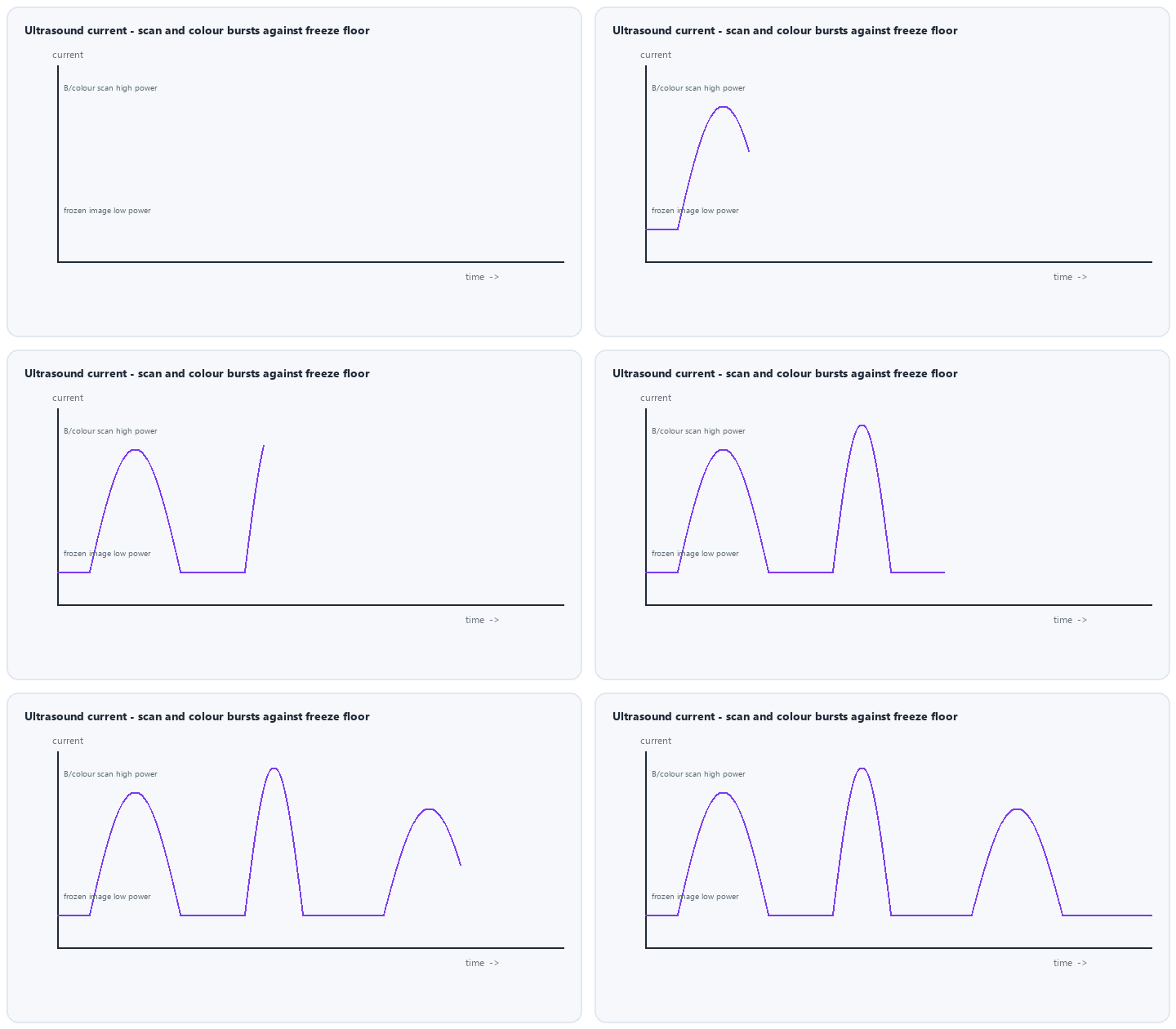
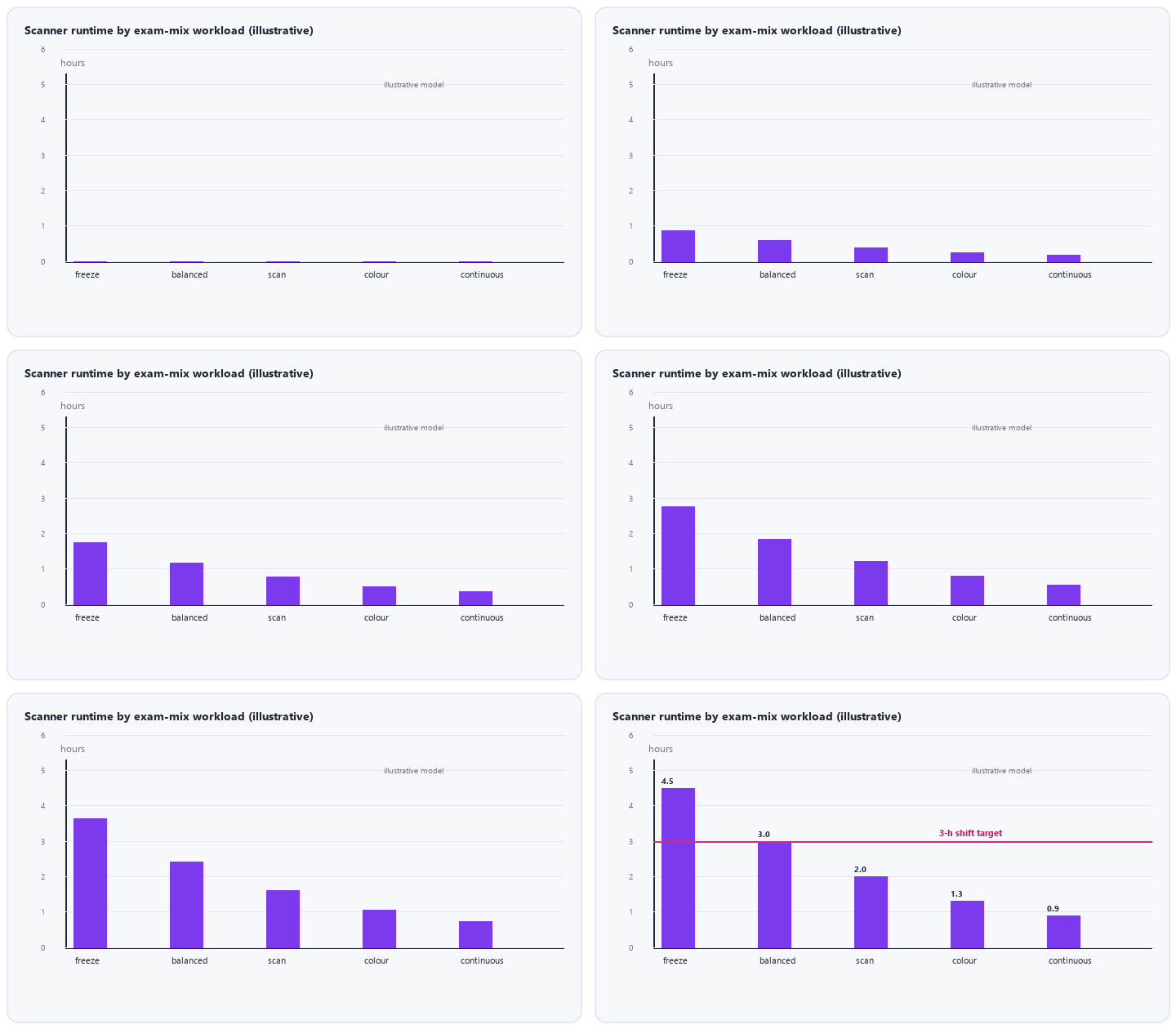
Because scan and freeze power differ several-fold, runtime depends on the examination workflow: a fast point-of-care protocol that freezes often lasts far longer than continuous colour Doppler scanning. Datasheet runtimes therefore state a reference exam mix, and an honest battery design models the fraction of time in B-mode, colour/PW, frozen and standby. ECG recorders add a different pattern — continuous low-power acquisition with short bursts of printing (thermal recorder) or wireless transfer — while ambulatory Holter monitors live at milliwatt average power for days.
Ultrasound diagnostic and monitoring equipment is governed by IEC 60601-2-37 (2007+A1:2015, with the third edition published in 2024); diagnostic ECGs by IEC 60601-2-25 and ambulatory ECG by IEC 60601-2-47. FDA 510(k) reviews cite these alongside IEC 60601-1 (for example product code IYN for pulsed-Doppler ultrasound). Essential performance — imaging fidelity, diagnostic accuracy, acoustic-output limits — must be maintained on battery power, and the battery cannot introduce noise or artefact into the analogue front-end, which sets strict requirements for supply rail cleanliness.
Pocket and handheld designs favour lithium for weight, but NiMH remains well suited to ruggedised laptop-class and cart-portable systems used inside hospitals and clinics: it delivers the scan-mode pulse current from a flat, low-noise voltage curve, tolerates dock-based charging between shifts, and its aqueous chemistry is intrinsically safe in a busy ward. Paper B compares chemistries and sizes by exam mix; Paper C covers the IEC 60601-2-37 validation trail.
Weijiang Power builds low-impedance, matched NiMH cells and custom packs for portable diagnostic OEMs: clean rail delivery for sensitive front-ends, welded construction, NTC supervision and IEC 62133-1/UN 38.3 documentation. Send your mode-by-mode power trace and exam-mix runtime target and we will size a pack that sustains diagnostic performance.


