A medical battery is not qualified by a good first charge; it is qualified by a documented trail of evidence that the device remains safe and performs its declared runtime across its service life. This third and final paper on infusion and syringe-pump batteries maps the standards architecture — IEC 60601-1 and its particular standard 60601-2-24, the cell safety standard IEC 62133-1 for nickel chemistry, and UN 38.3 transport testing — then explains the runtime validation, accelerated aging and failure-mode work that turns a design into a certifiable, field-reliable product.
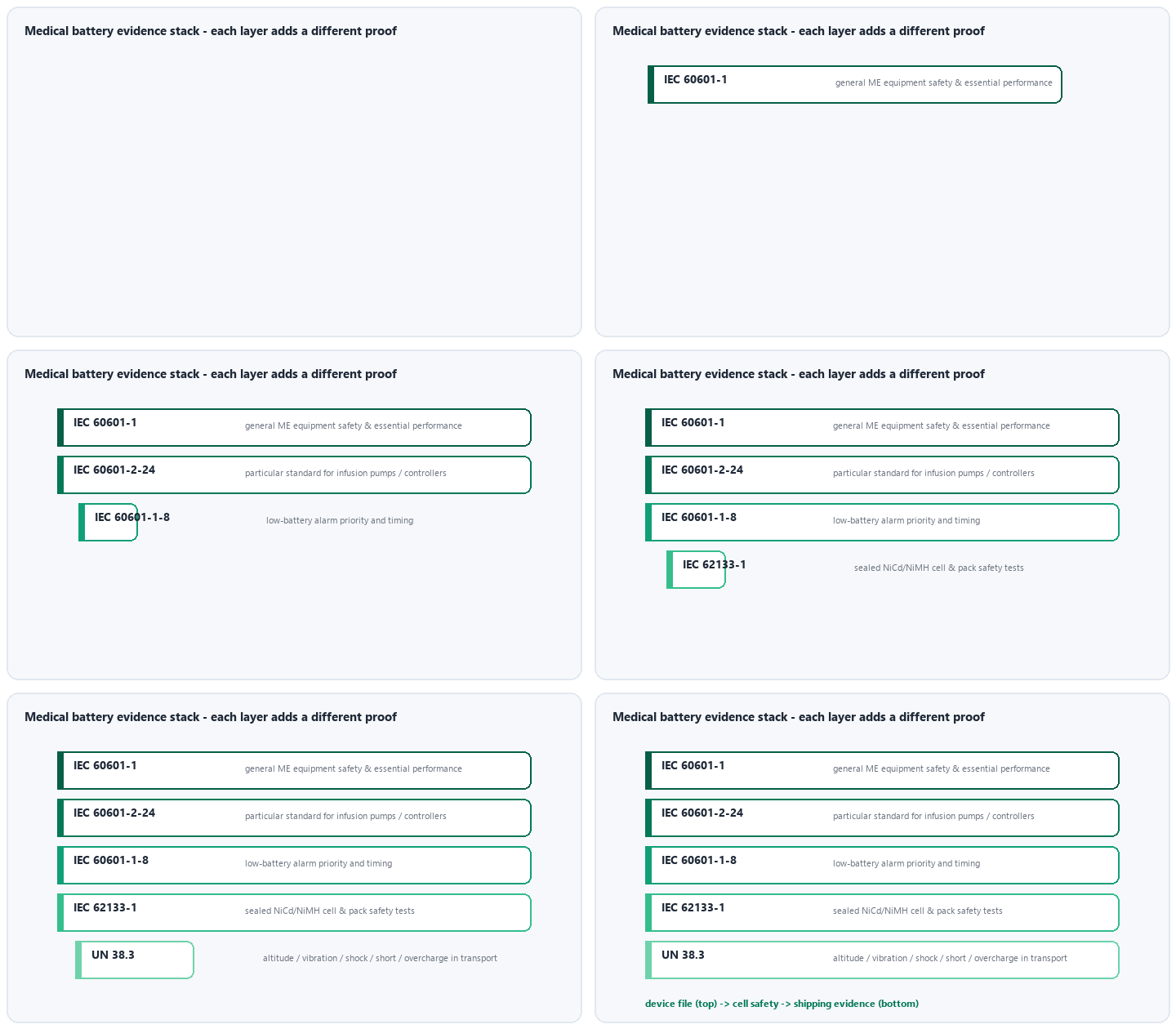
Medical electrical equipment is certified in layers, and confusing the layers is a common program delay:
Regulators and notified bodies expect the manufacturer to demonstrate predictable runtime and a safe transition when energy becomes low. In practice this means a defined test matrix rather than a single measurement: run the pump from full charge to shut-down at the declared reference rate (for example 25 ml/h), at a low rate and a high rate; at cool, nominal and warm ambient temperatures; with the display backlight at its clinical setting and the wireless module active; and with new cells as well as cells cycled to the end-of-life point. Each run records the time from start to low-battery alarm and from alarm to shut-down, because the alarm must leave enough operating time to connect an alternative supply or finish the infusion safely. Quoted endurance — such as the common procurement requirement of at least 5 hours at 10 ml/h, or a 4-hour declaration at 25 ml/h — must be reproducible within this matrix.
IEC 62133-1 exercises the cell and pack against foreseeable misuse through mechanical, electrical and environmental cases: controlled charge and discharge behaviour, external short circuit at high and ambient temperature, prolonged overcharge, forced discharge, free-fall or mechanical shock, thermal cycling, and mould-case stress. A pack that passes demonstrates its safety valve, current-interrupt and thermal design work as intended — the same properties that make NiMH's failure mode a controlled vent rather than a thermal event. Design dossiers pair these reports with cell datasheets, welding and insulation drawings, and the protection schematic to show the energy source is safe in normal and single-fault conditions as 60601-1 requires.
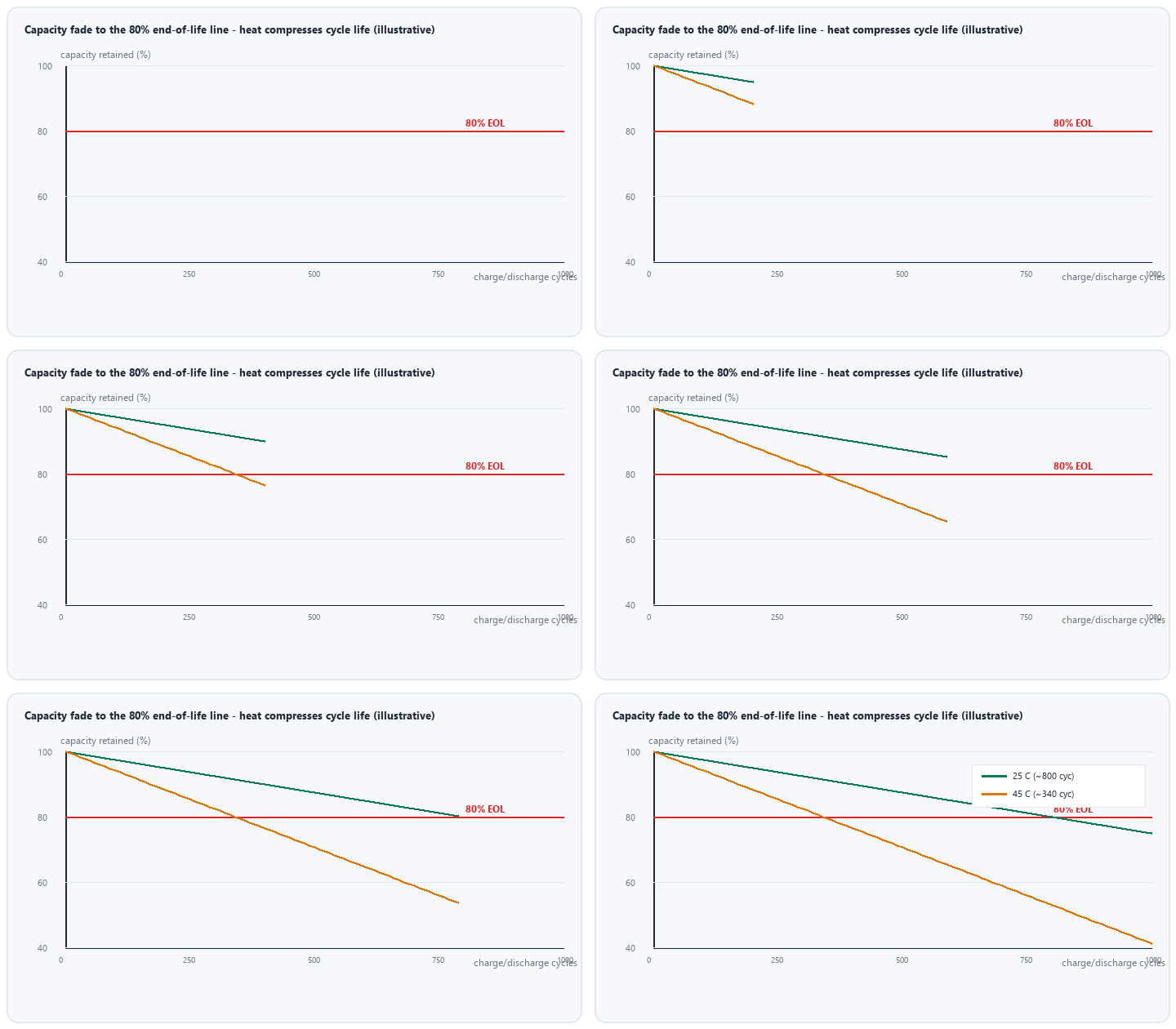
Infusion pumps serve for years, and the battery warranty is usually set against the point where capacity falls to 80 % of nominal. NiMH capacity fade is driven by cycle count, depth of discharge and temperature; published industry data place typical NiMH cycle life around 500–1000 cycles to 80 %, with calendar life commonly in the 3–10-year range depending on storage temperature. Engineers build confidence through cycle-life testing at representative depth of discharge, elevated-temperature storage following Arrhenius principles to compress calendar aging, and periodic reference discharges that plot the fade curves shown above. Because fade is gradual rather than sudden — a recognised NiMH characteristic — a well-designed replacement program can be scheduled from runtime trending rather than reacting to in-service failure.
A medical OEM should expect from its battery supplier: IEC 62133-1 (nickel) or 62133-2 (lithium) reports traceable to the production cell; UN 38.3 summary for shipment; cell-bin and weld-process controls; a runtime validation report at declared rates and temperatures; and an agreed end-of-life and replacement criterion. This package is what converts a working prototype into a device that survives design-history-file review, notified-body assessment and years of hospital use.
Weijiang Power builds NiMH cells and custom packs for medical-device OEMs with the validation trail included: IEC 62133-1 and UN 38.3 documentation, matched-cell and weld process records, NTC/protection integration, and support for customer runtime-validation campaigns under IEC 60601-1. Send us your device's risk file, declared endurance and reference flow rate, and we will engineer a pack — and the evidence behind it — ready for your medical certification program.


