The telematics box — T-Box, TCU or TCAM — is the connected car's gateway to the outside world. It bridges the vehicle's internal networks to cellular infrastructure, cloud platforms and emergency services, and in an electric vehicle it also feeds the regulatory data pipelines that monitor battery safety. Despite its small size, a modern T-Box is one of the most integration-dense electronic control units in the vehicle. This article dissects its hardware architecture block by block, explains how the subsystems cooperate, and shows why the power-management design — including the backup battery — is where many programs succeed or fail.
The T-Box sits at a deliberate chokepoint. Inward, it connects to the CAN (and increasingly CAN-FD or automotive Ethernet) buses that link the battery management system, vehicle control unit, ADAS controllers and body electronics. Outward, it carries cellular, GNSS and sometimes Bluetooth or Wi-Fi links. This position lets it perform four jobs simultaneously: collect vehicle data, execute remote commands, provide location and time, and place an emergency call after a crash. Because it speaks both languages, it is also a security boundary, which shapes every design decision below.
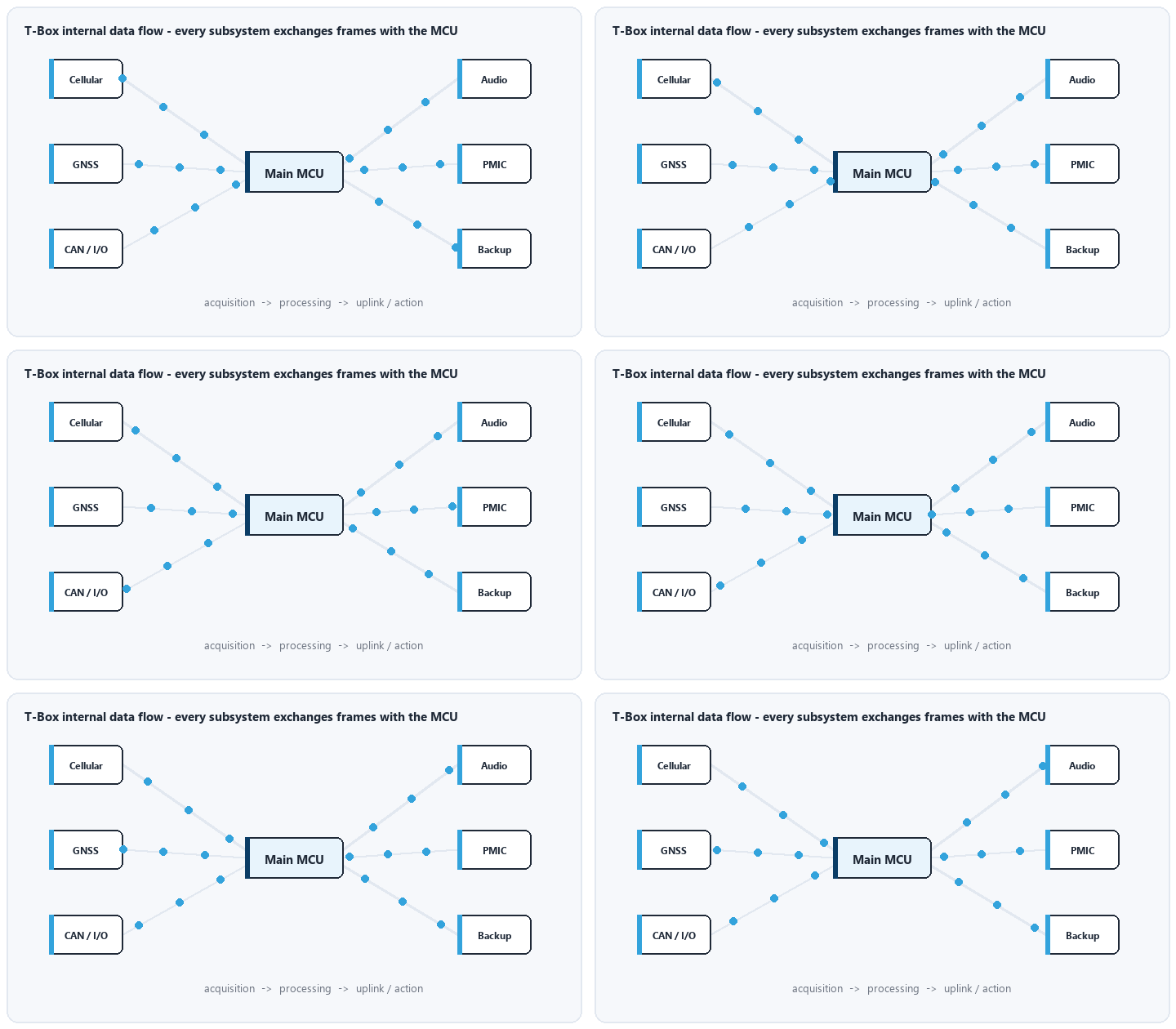
The central processor is usually an automotive-grade Cortex-M microcontroller or a Cortex-A application processor paired with a safety MCU. It runs the AUTOSAR stack or a Linux/Android-based telematics framework, schedules data acquisition, manages power states and hosts the security services — secure storage, TLS stacks and the secure boot root of trust. Automotive qualification (AEC-Q100) and an ambient rating that survives a parked cabin in summer are baseline requirements; the processor must wake, acquire position, register on the network and transmit within seconds of ignition.
A cellular modem module handles the air interface. Most current programs use LTE Cat.1 or Cat.4 modules for cost-efficient telematics, with 5G and C-V2X-capable modules reserved for premium and V2X platforms. The module integrates its own baseband, RF front-end and (commonly) an embedded eSIM in MFF2 packaging. Antenna routing, return loss and isolation between the cellular, GNSS and diversity antennas are governed tightly, because a badly placed antenna degrades every software feature the platform promises. Dual-SIM or iSIM designs support cross-border fleet operation.
A multi-constellation GNSS receiver tracks GPS, BeiDou, GLONASS and Galileo, often on L1 plus L5 bands for robustness. Beyond raw position it delivers the one-pulse-per-second (1PPS) reference that disciplines network timing and event logging. Receivers feed on wheel-tick and gyroscope data to run automotive dead reckoning inside tunnels and urban canyons — a topic explored in depth in our dedicated positioning article.
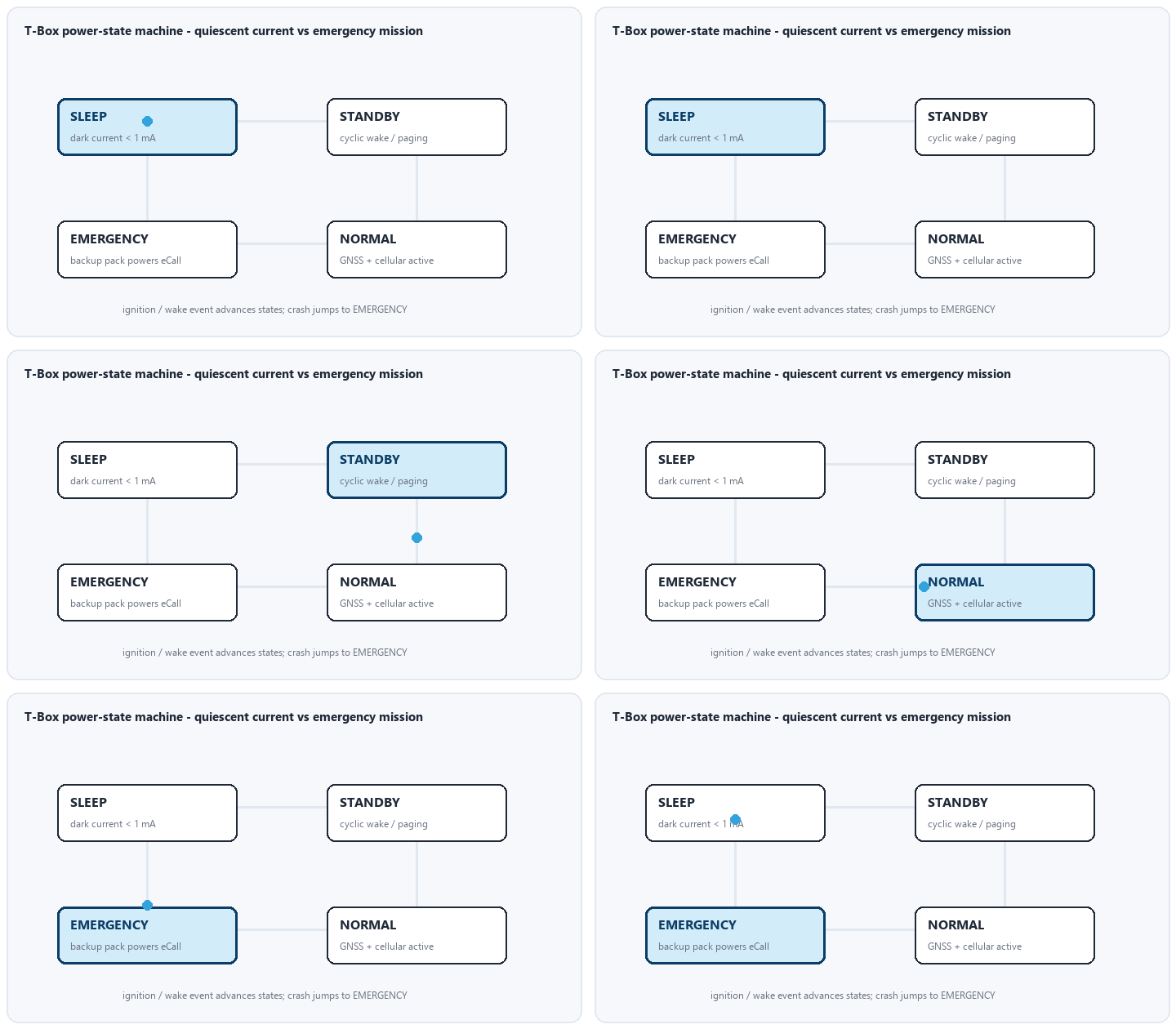
The T-Box is permanently connected to the vehicle's 12 V rail even when parked, which makes quiescent current a first-class specification: a power-management IC sequences the rails, supports cyclic wake-up and network-initiated paging, and must hold dark current to milliamps or below to avoid draining the traction battery's DC-DC supply. The second, uniquely automotive requirement is autonomous backup power. In a collision the main battery can be torn from its cables, yet the T-Box must still place the emergency call, transmit location and sustain a voice session. A small internal backup pack — nickel-metal hydride or high-temperature lithium cells — bridges the gap, switched onto the rail by an ideal-diode or load-switch controller. Its chemistry, capacity and wide-temperature behaviour are covered in detail in our eCall backup battery article.
eMMC or serial flash stores firmware, event logs and offline data cache for cellular dead zones; a secure element or hardware crypto island holds keys and certificates. Designers must also plan for in-circuit programming, end-of-line configuration, sealed housing against cabin humidity, and thermal dissipation for a module bolted under the dashboard or roof. Every block above must survive the vehicle's 10–15-year life — which is why component selection, derating and validation follow automotive rather than consumer rules.
A T-Box is only as reliable as its last line of power. Weijiang Power designs and manufactures wide-temperature, long-life NiMH and lithium backup cells and custom packs for telematics and emergency-call terminals — including tabbed, welded and connectorised assemblies built for automated SMT and box-build integration, with UN 38.3, IEC 62133 and customer-specific reliability documentation. Share your rail voltage, quiescent budget, talk-time target and cabin temperature profile, and our engineers will size a backup-power solution that lasts the vehicle's whole service life.


