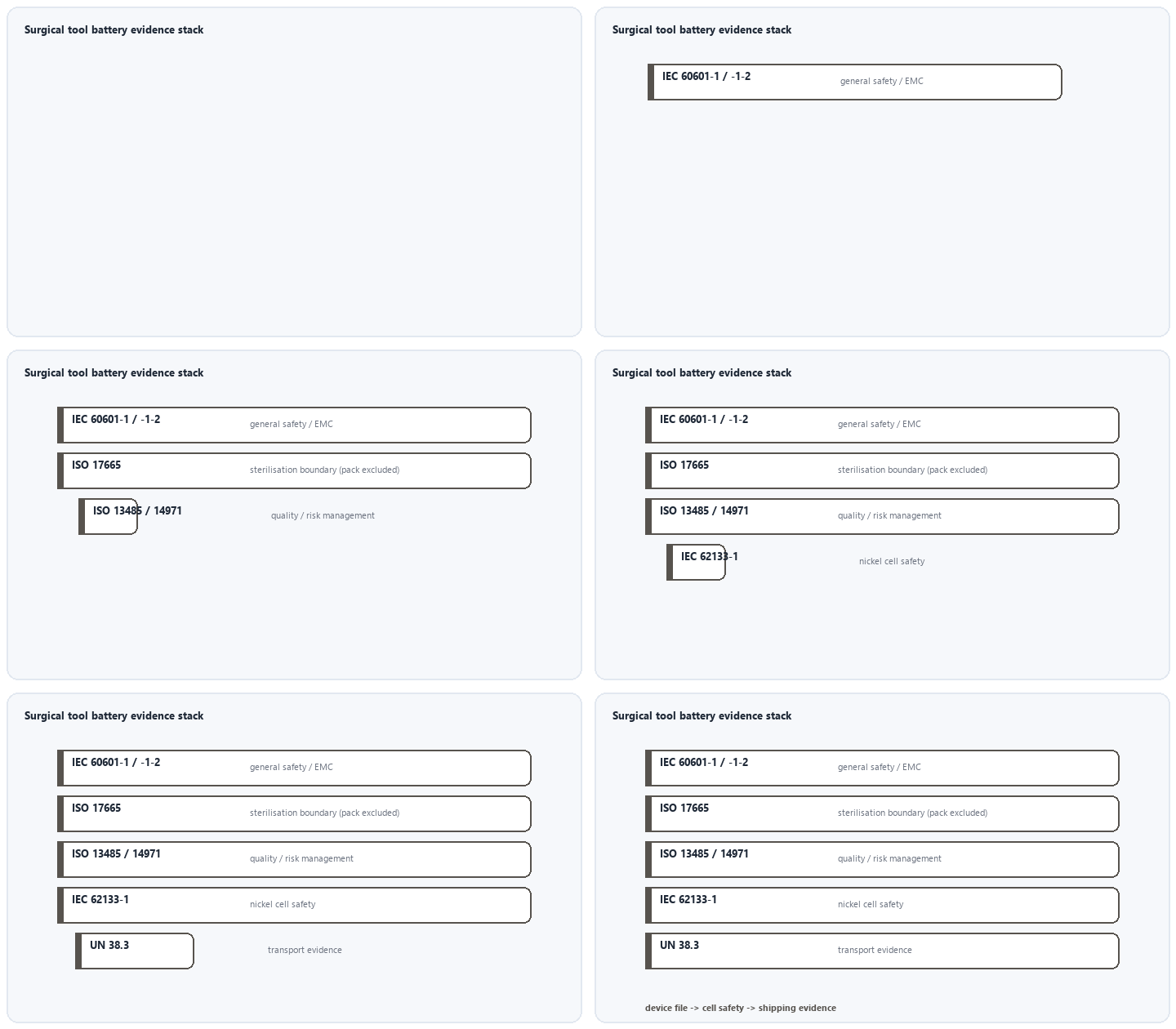
Paper C maps the validation programme for a surgical-tool battery: the general IEC 60601-1 safety case, the sterilisation boundary defined by ISO 17665, performance-under-load and rapid-cycle endurance testing, IEC 62133 cell safety and UN 38.3 transport evidence — a programme shaped by the fact that a battery failure in the OR is a patient-safety event.
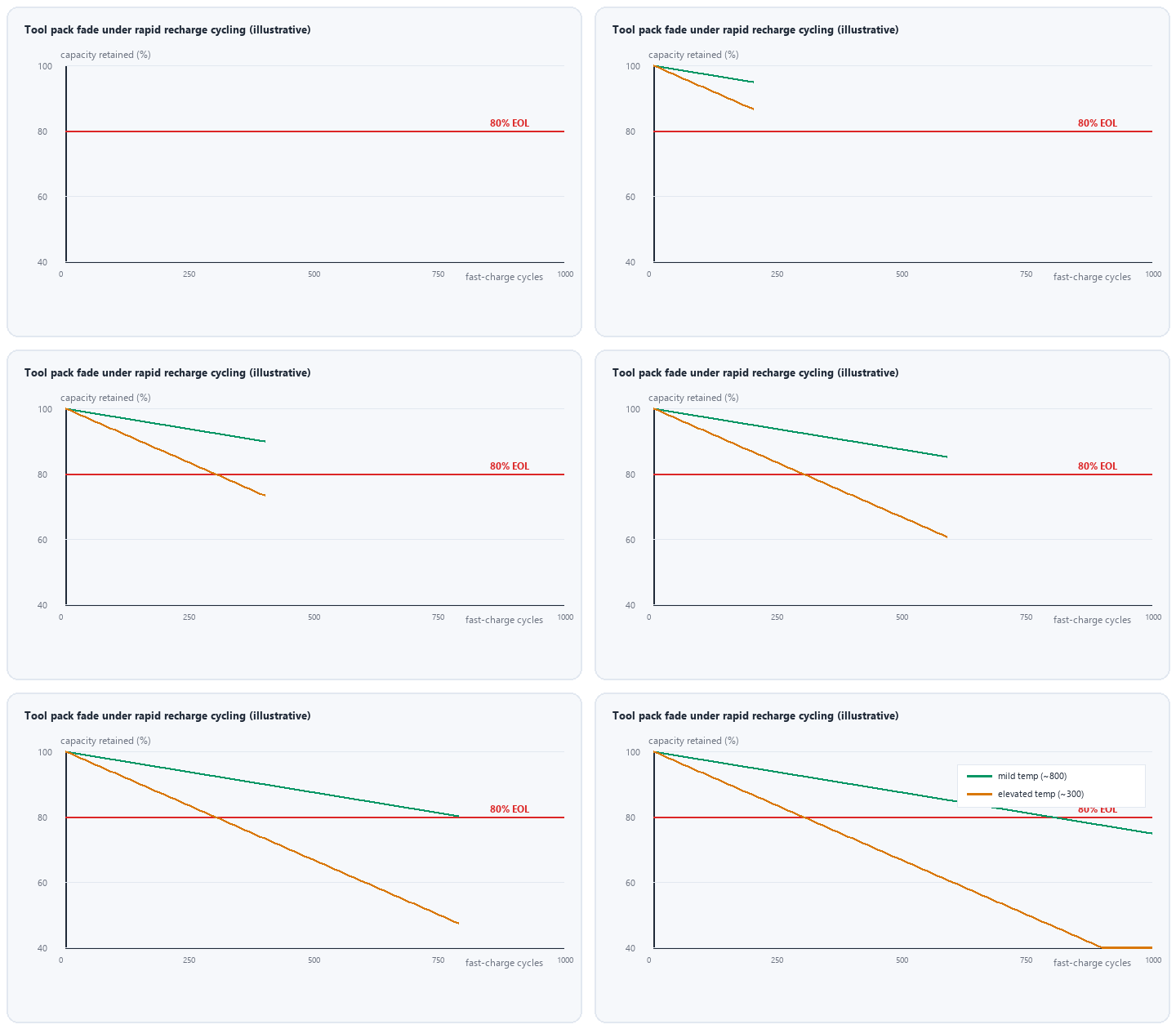
The battery is validated against the motor's full envelope: free-run, sustained cutting at rated load (around 180 W-class output), repeated stall events, and the longest uninterrupted cutting sequence in the intended procedures. Each run records rail voltage through the stall transient (the controller must not reset), delivered speed/torque under load, and case temperature. Cycling reproduces OR logistics — rapid recharge followed immediately by another discharge, hundreds of times — because packs are reused across many cases per day; the endurance target tracks the handpiece's service life (autoclave-rated handpieces are qualified for hundreds to thousands of cycles, and the pack fleet must support that workflow through a managed replacement programme). Aged packs at 80 % repeat the worst-case cutting sequence to guarantee a procedure can always be finished.
A defining test is negative rather than positive: the pack must be shown to remain safe and functional after the disinfection regime it actually sees — chemical wipe-down and low-temperature surface treatment inside a sterile barrier — while labelling and design prevent accidental autoclaving, which would vent or destroy cells. Contacts and seals are tested against repeated fluid exposure and disinfectant chemistry, and drop/vibration tests reproduce a tool striking a tray. IEC 62133 cell cases (external short at ambient and elevated temperature, overcharge, forced discharge, mechanical and thermal abuse) then validate intrinsic safety; NiMH's controlled-vent behaviour is particularly valuable in an oxygen-enriched OR, where any thermal event is especially hazardous.
High-rate cycling and fast charging age a pack through both capacity fade and internal-resistance growth — the latter matters more here, because rising resistance stretches stall behaviour and reduces torque. Development combines rapid-cycle testing with elevated-temperature storage to set a replacement rule based on cutting performance rather than age alone, and paired-battery rotation keeps every pack's history traceable under ISO 13485.
Weijiang Power supplies high-rate NiMH cells and custom surgical-tool packs with IEC 62133-1 and UN 38.3 evidence, welded heavy busbars, sealed contact integration and support for IEC 60601-1 performance and rapid-cycle endurance validation. Send your motor trace including stall, disinfection regime and charge-time target and we will engineer a pack that sustains torque to the end of every case.


