Paper B guides the battery decision for cordless surgical drills and saws: comparing high-rate NiMH with lithium-ion, sizing from stall current and the longest cutting sequence rather than nameplate capacity, designing rapid recharge and hot-swap, and building a pack that survives the OR environment.
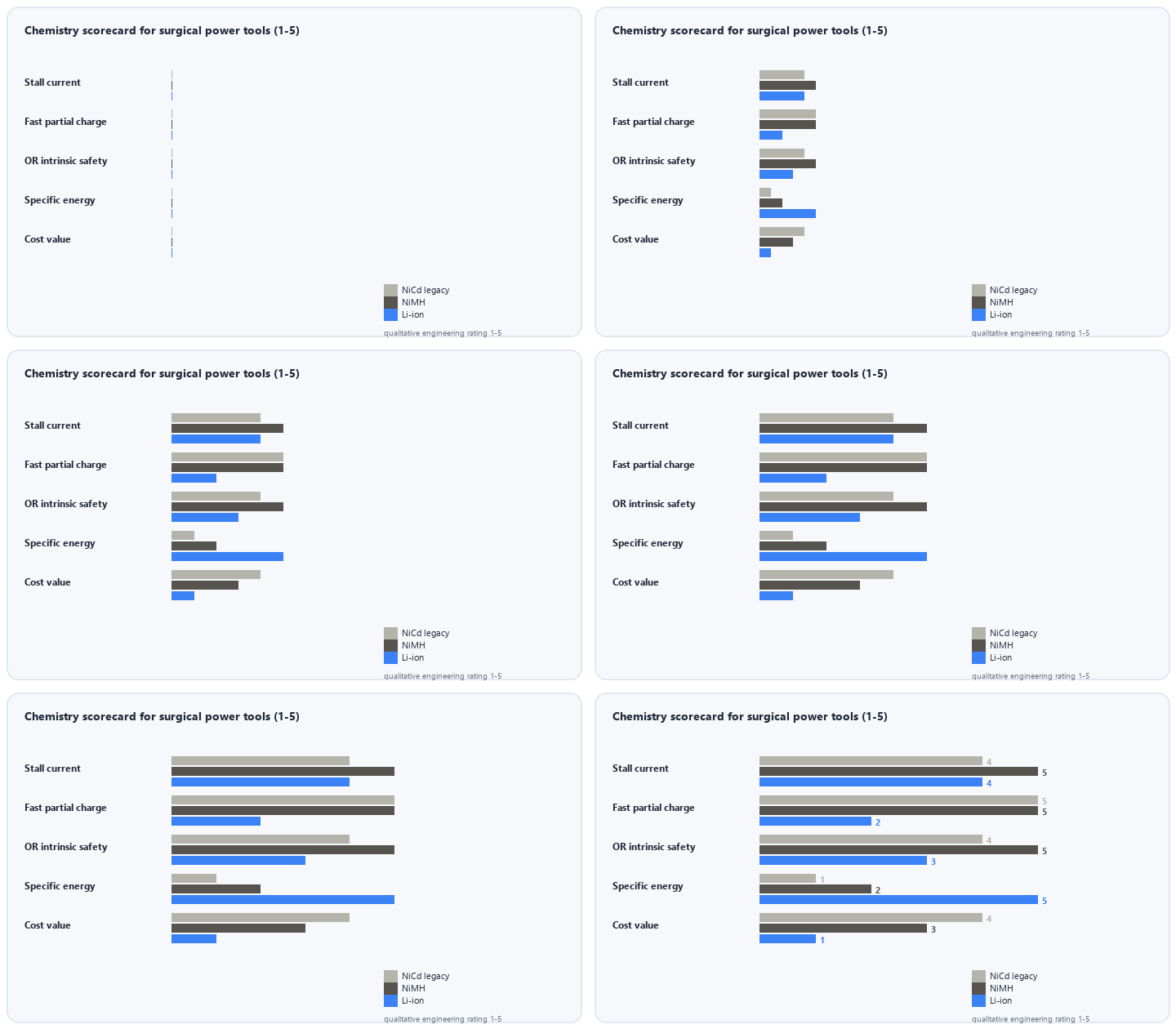
Lithium-ion packs (commonly 12 V 2600 mAh-class in current platforms) win on weight and run time, with 60-minute fast charging, but require a BMS that must never cut out on a cutting surge and carry the thermal-management burden of a flammable electrolyte in an oxygen-rich operating theatre. High-rate NiMH concedes specific energy but offers: very low internal resistance for stall-level pulse current without voltage collapse, tolerance of repeated rapid partial recharge between back-to-back cases (a regime that stresses lithium), an aqueous intrinsically safe chemistry, and mechanical robustness under the vibration of a saw. For value platforms, emerging-market fleets and tools prioritising certainty over grams, NiMH remains a proven selection — and it is the direct upgrade path from legacy NiCd packs with none of cadmium's toxicity.
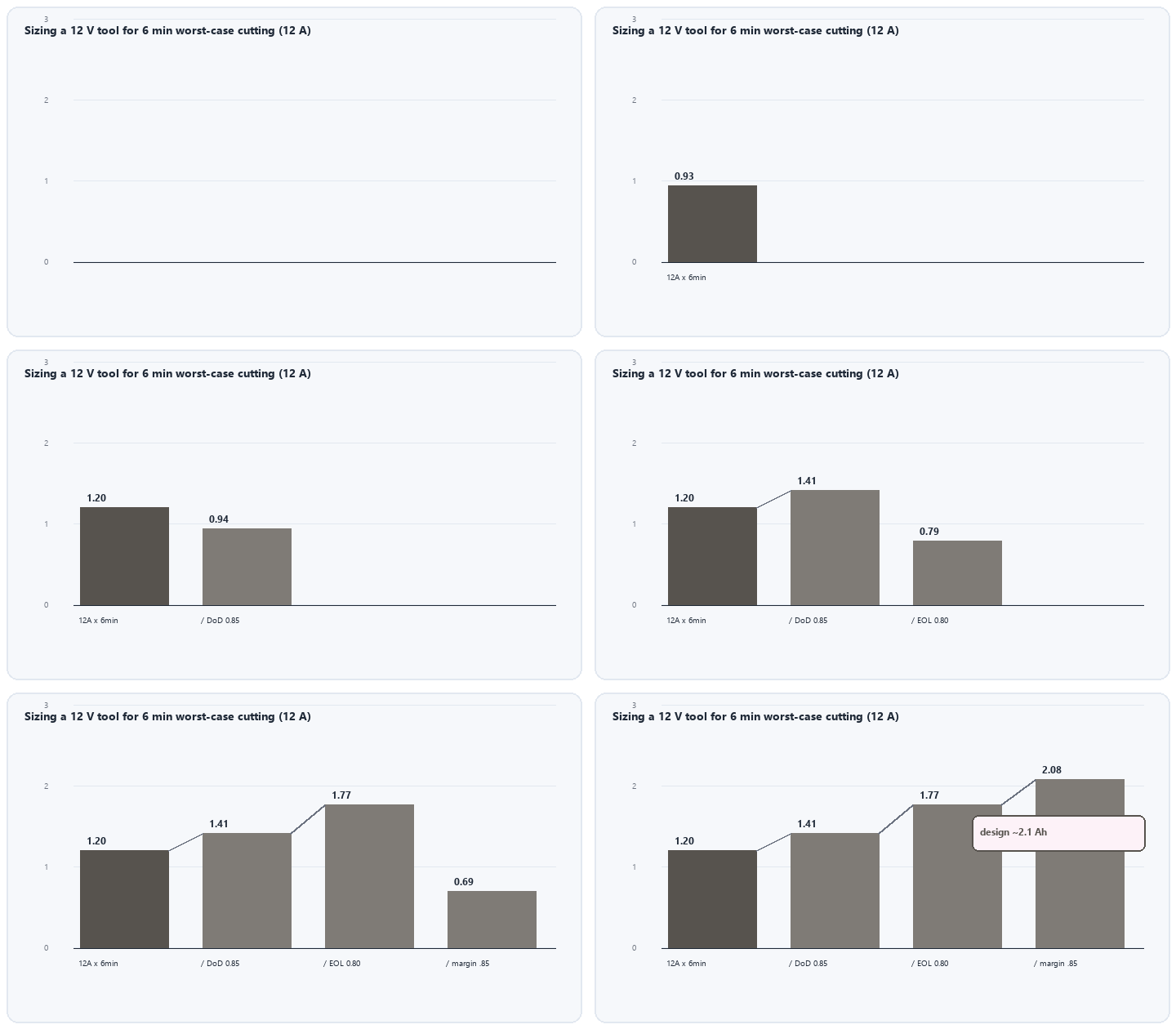
The sizing chain starts with the motor: free-run current, sustained cutting current and measured stall current set the cell count and grade (high-rate cells, not energy cells). A 180 W tool on a 12 V rail draws 15 A average at full output and several times that at stall; ten series NiMH cells (12 V nominal) must hold the controller's minimum rail voltage through a bind at end of life. Energy follows from the longest uninterrupted cutting sequence plus a full-case margin: if worst-case cumulative motor-on time is six minutes at an average 12 A, raw charge is 1.2 Ah, and depth-of-discharge (0.85), end-of-life fade (0.8), thermal margin (0.85) and the requirement to finish a second emergency case raise the design toward the 2.5–3 Ah class — matching commercial pack sizes.
OR logistics demand fast turnaround: chargers refill a pack in about an hour, which requires thermistor-supervised -ΔV termination that accepts high charge current without overheating the centre cells. Pairs of identical packs rotate through charger and tool, swapping in seconds with gloved hands, so contacts must be sealed against cleaning chemistry, wipe-down disinfectants and fluid splash, with positive latching that cannot release under saw vibration. Cell matching by internal resistance prevents one weak cell from throttling torque during a bind.
A cutting burst heats both motor and pack; the housing conducts heat away from cells while the sterile barrier keeps the pack fluid-tight. Welded nickel-plated-copper busbars carry stall current without voltage drop or heating, and the pack is mechanically isolated from the gearbox's high-frequency vibration. Unlike the handpiece, the pack is never autoclaved — a boundary the labelling and instructions enforce.
Weijiang Power builds high-rate NiMH cells and custom surgical-tool packs with resistance-matched welded cells, heavy busbars, sealed contact integration and IEC 62133-1/UN 38.3 documentation. Send your motor trace including stall, worst-case cutting sequence and charge-time target and we will size a pack that holds torque through the whole procedure.


