Papers A and B defined the heat-and-motor load of feeding pumps and warmers and sized the NiMH pack with an explicit alarm reserve. Paper C builds the validation case: the tests and documents that prove delivery accuracy holds to the end of discharge, that the warming function stays inside its therapeutic band while battery-powered, and that the cell and pack meet the safety and transport rules a notified-body file requires.
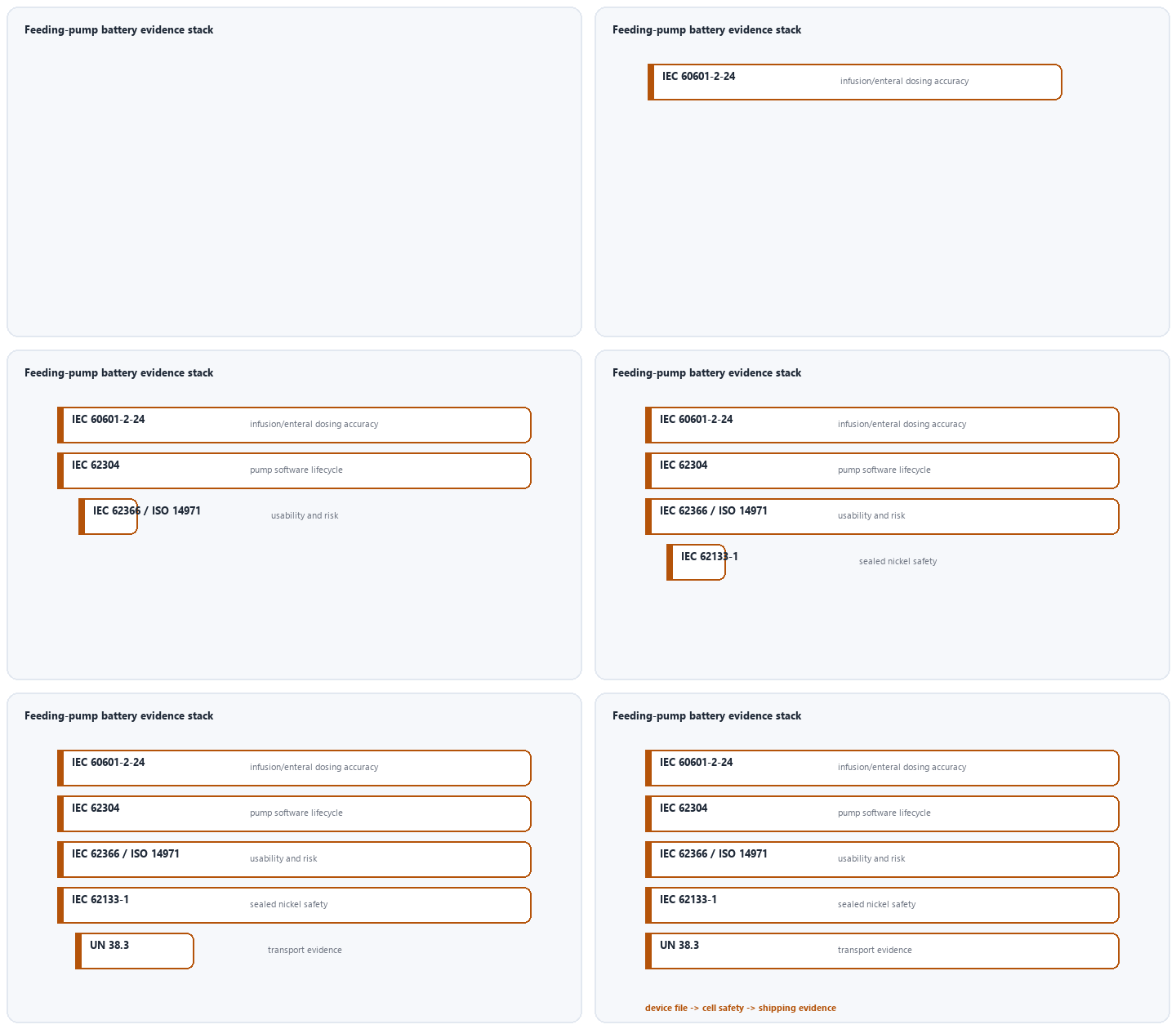
The device sits under IEC 60601-1 general safety and essential performance, with IEC 60601-2-24 as the particular standard for infusion pumps and controllers - the document that governs delivery accuracy, occlusion and air-in-line alarms and the trickle, bolus and continuous modes enteral devices share with infusion devices. Software that controls motor stepping, heater regulation and alarms falls under IEC 62304, usability of the low-battery and alarm interface under IEC 62366, and risk management across the whole file under ISO 14971. The cells themselves are specified to IEC 61951-2 and safety-qualified to IEC 62133-1, with UN 38.3 for shipment. Warming adds a thermal-safety thread: surface and fluid temperature limits, fault behaviour if control fails open or closed, and verification that the battery-powered state cannot silently drift outside the declared band. The animated stack below sequences the evidence from device file to shipping papers.
The signature test for a battery-powered pump is delivery accuracy measured not only on a fresh pack but at defined state-of-charge checkpoints down to the low-battery transition. Under IEC 60601-2-24 methodology, delivered volume is gravimetrically measured over defined windows at the minimum, typical and maximum flow rates, at the warming setting that draws the most current, and at temperature extremes; the error band - commonly within a few percent of programmed volume over a sufficiently long window for a well-designed device - must hold until the alarm state. Test logs correlate each window with pack voltage under load, exposing any late-discharge step misses before they reach a patient. The same campaign verifies bolus accuracy (a burst of motor steps on a depleted pack is the worst case for sag), occlusion-alarm response independent of battery state, and the graceful behaviour at the cutoff: alarm priority per IEC 60601-1-8, memory retention, and no uncontrolled free-flow.
A warmer must be tested in both docked and battery states because the source impedance differs. Temperature is logged at the fluid path over a full warm-up-and-hold cycle at the declared extremes of flow and inlet temperature, confirming steady-state accuracy (against the roughly ±0.5 °C control band published platforms claim) and time-to-temperature. Fault tests include sensor disconnect, sensor short, heater stuck-on with the independent thermal cut-out as the last line, and operation at low battery where brown-out of the controller must default to a safe state with an alarm rather than uncontrolled heating. Combined motor-plus-heater runs verify that the simultaneous step-and-heat transient does not pull the controller below its brown-out reset anywhere above the declared low-battery threshold - a test that directly validates the internal-resistance margin established during sizing.
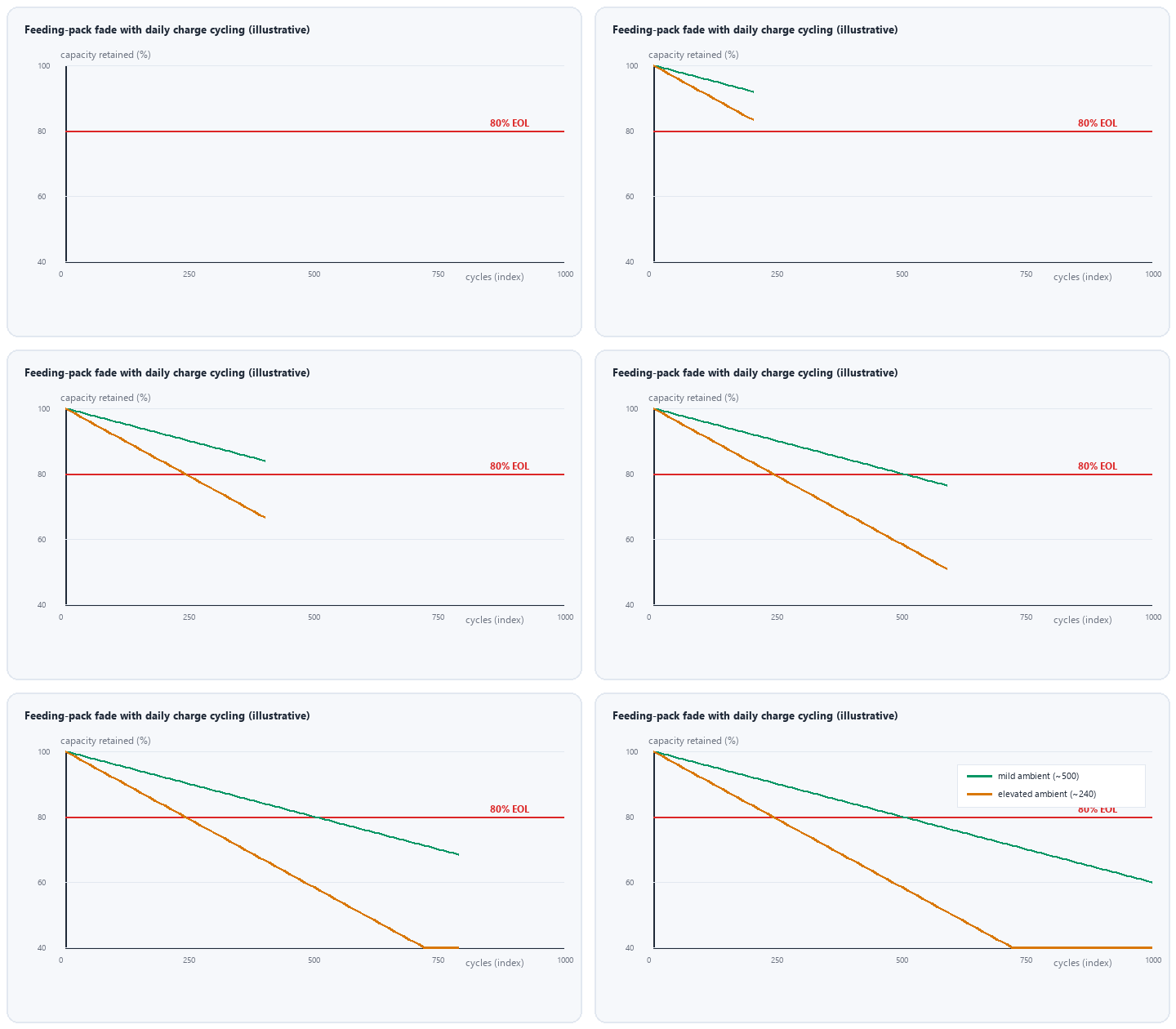
A ward or rental pump is docked after every shift, so the pack sees hundreds of shallow cycles rather than deep discharges. The aging programme therefore combines cycle-life testing under the actual charge regime (-dV/dt termination, defined maintenance current, dock temperature) with calendar storage at controlled and elevated ambients, checking capacity, internal resistance growth and delivery accuracy at checkpoints. The animated chart below contrasts capacity retention under mild and elevated temperature profiles; it is an illustrative model of the known rule that heat dominates nickel-system aging, and a declaration cites the manufacturer's measured data. Also documented are self-discharge over a weekend off the dock, behaviour after the maximum declared storage interval, and charge safety under a faulted charger.
IEC 62133-1 supplies the cell and battery safety case - controlled charge and discharge, external short, overcharge, forced discharge, free fall, shock and vibration, thermal abuse - with pack-level protection (thermal cut-out, fuse, polarity-keyed exchange interface) verified by single-fault tests. EMC per IEC 60601-1-2 proves the motor and heater switching does not disturb nearby monitored patients and that the pump survives ward electromagnetic environments. Transport follows the nickel-metal hydride rules: NiMH batteries ship under UN 3496 as Class 9 where applicable, a materially simpler logistics path than lithium, which supports European and global distributors. The finished audit file holds the 60601-2-24 accuracy-to-EOL report, thermal validation, 62304 software classification and records, 62133-1 safety report, 61951-2 datasheets, UN 38.3 summary, cycle and float-life data, and the recommended pack-exchange criterion at 80 percent capacity.
Weijiang Power supplies the NiMH cells, welded packs and documentation backbone for enteral feeding pumps and portable warmers: resistance-matched strings for late-discharge accuracy, thermistor-integrated dock charging, and IEC 61951-2, IEC 62133-1 and UN 38.3 dossiers aligned to an IEC 60601-2-24 validation plan. Share your accuracy band, flow range, warming profile and declared service life and we will help you close the evidence trail from cell to notified-body file.


