Portable oxygen concentrators (POCs) and battery-operated nebulizers turn respiratory therapy into a wearable, travel-capable product — and make the battery a clinical component, because an exhausted pack interrupts oxygen delivery. Paper A dissects their loads under ISO 80601-2-69, shows why runtime is governed by flow setting, and contrasts a compressor-driven concentrator with a vibrating-mesh nebulizer.
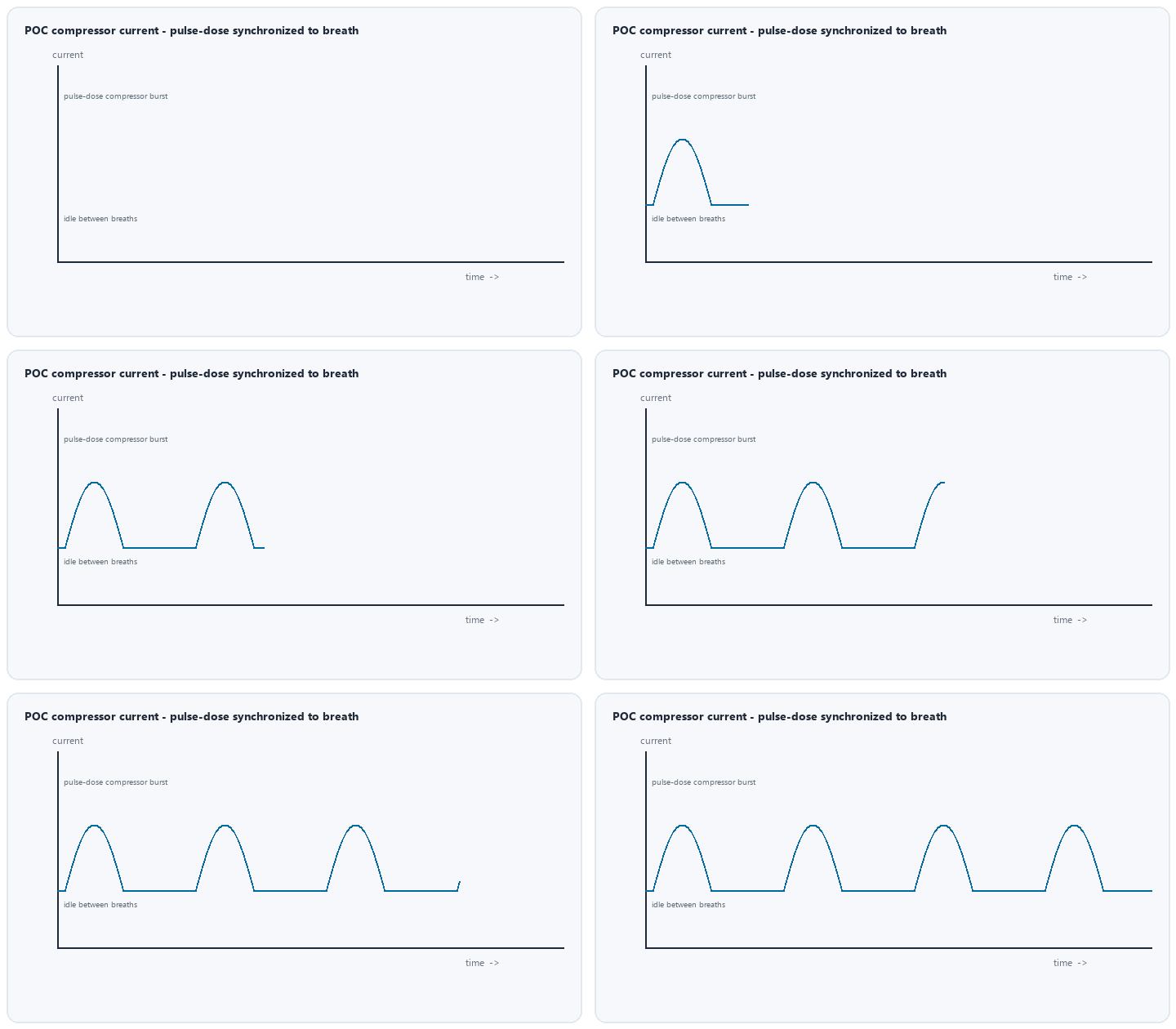
A POC contains a small compressor that pressurises air through molecular sieve beds (pressure-swing adsorption), switching valves, control electronics and a pulse-dose delivery valve. The compressor dominates energy: it runs continuously in continuous-flow mode, or in bursts synchronized to inhalation in pulse-dose mode, which is why pulse settings substantially extend battery life. A mesh nebulizer works on an entirely different principle — a piezo-mesh vibrates around 110 kHz — and draws only 0.6–2 W: the Omron MicroAir U100 consumes about 1.2 W and runs roughly 4 hours on just two AA cells, with typical duty cycles such as 20 minutes on / 20 minutes off.
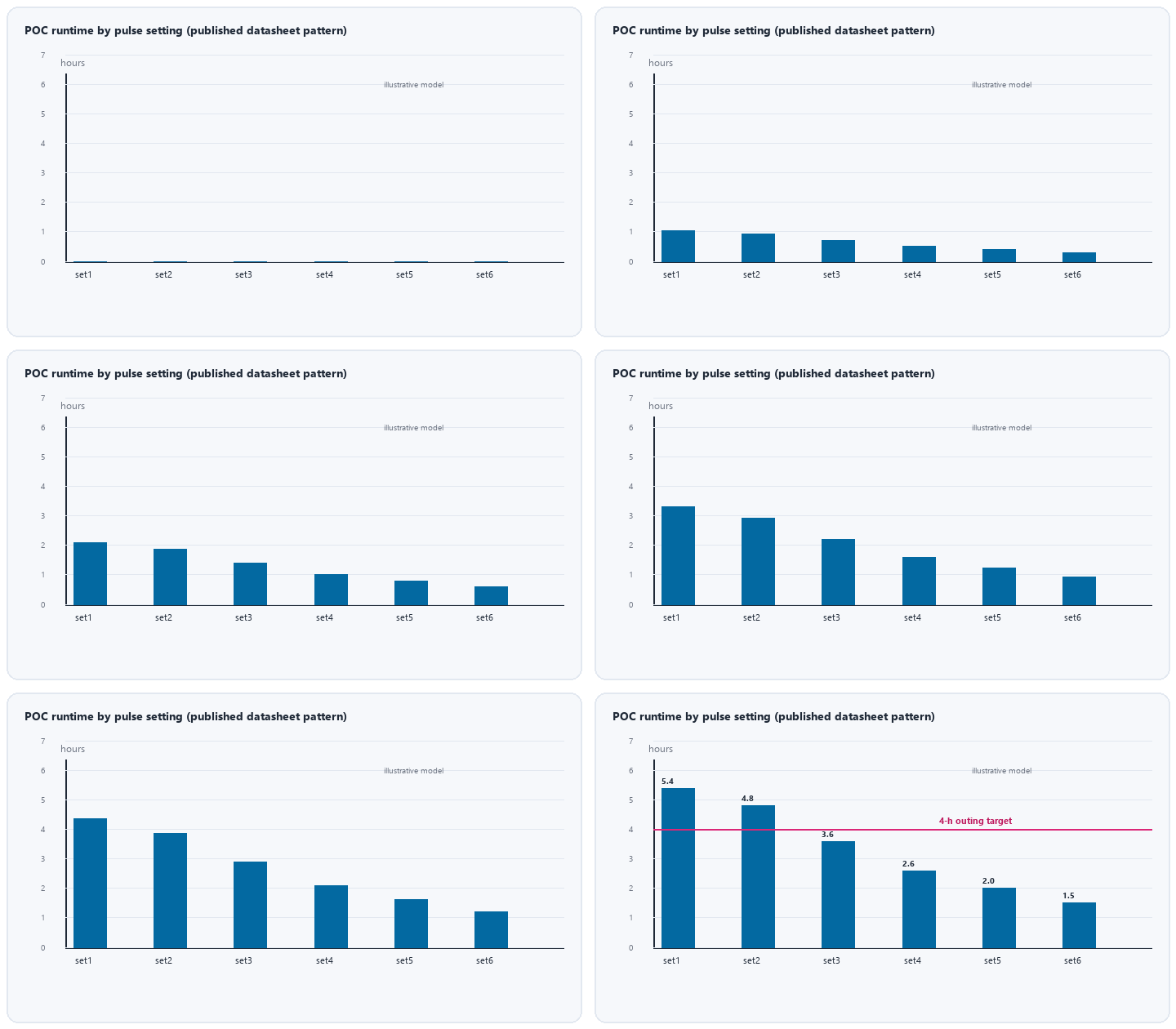
Every credible POC datasheet publishes a runtime table rather than a single number, because compressor work rises with delivered volume. Published examples: a 14.4 V 6.7 Ah POC runs up to 5.4 hours at setting 1 but only about 1.5 hours at setting 6; another platform quotes 5.4 h at setting 1 falling through 4.8 h at setting 2; continuous-flow devices show the same pattern in litres per minute. Datasheet figures are measured at room temperature, sea level and a reference breathing rate, so high altitude (the compressor works harder), heat and a fast respiratory rate all shorten real runtime — a gap clinicians must understand when planning flights or outings.
Oxygen concentrator equipment is governed by ISO 80601-2-69, which explicitly covers home, transport and commercial-aircraft use and distinguishes transit-operable devices; in the US, POCs are regulated under 21 CFR 868.5440 (Class II, product code CAW). Oxygen concentration purity and delivery accuracy are essential performance that the battery must preserve until the low-battery alarm — a POC cannot quietly stop delivering oxygen, so alarms under IEC 60601-1-8 and graceful degradation are central.
Lightweight wearable POCs have largely moved to lithium-ion for energy density and airline endurance. NiMH remains a strong fit in three places: stationary and home concentrator backup packs where weight is irrelevant, rugged cost-sensitive transport units, and the large family of 2×AA/AAA mesh nebulizers where two NiMH cells deliver the 1.2–2 W piezo load safely and rechargeably for years. Paper B compares the chemistries and sizes both device types; Paper C covers ISO 80601-2-69 validation, aircraft rules and aging.
Weijiang Power supplies NiMH cells and custom packs for respiratory-device OEMs — AA/AAA cells for mesh nebulizers and matched welded packs for home and transport concentrators, with IEC 62133-1/UN 38.3 documentation. Send your compressor or piezo current trace, setting table and runtime target and we will size a pack that holds oxygen performance to the declared limit.


