Paper B turns bed and hoist load profiles into a battery decision: comparing NiMH with sealed lead-acid and lithium-ion, sizing capacity from lift-cycle energy rather than ampere-hours on a label, and specifying the pack construction that survives years of actuator surges and float standby.
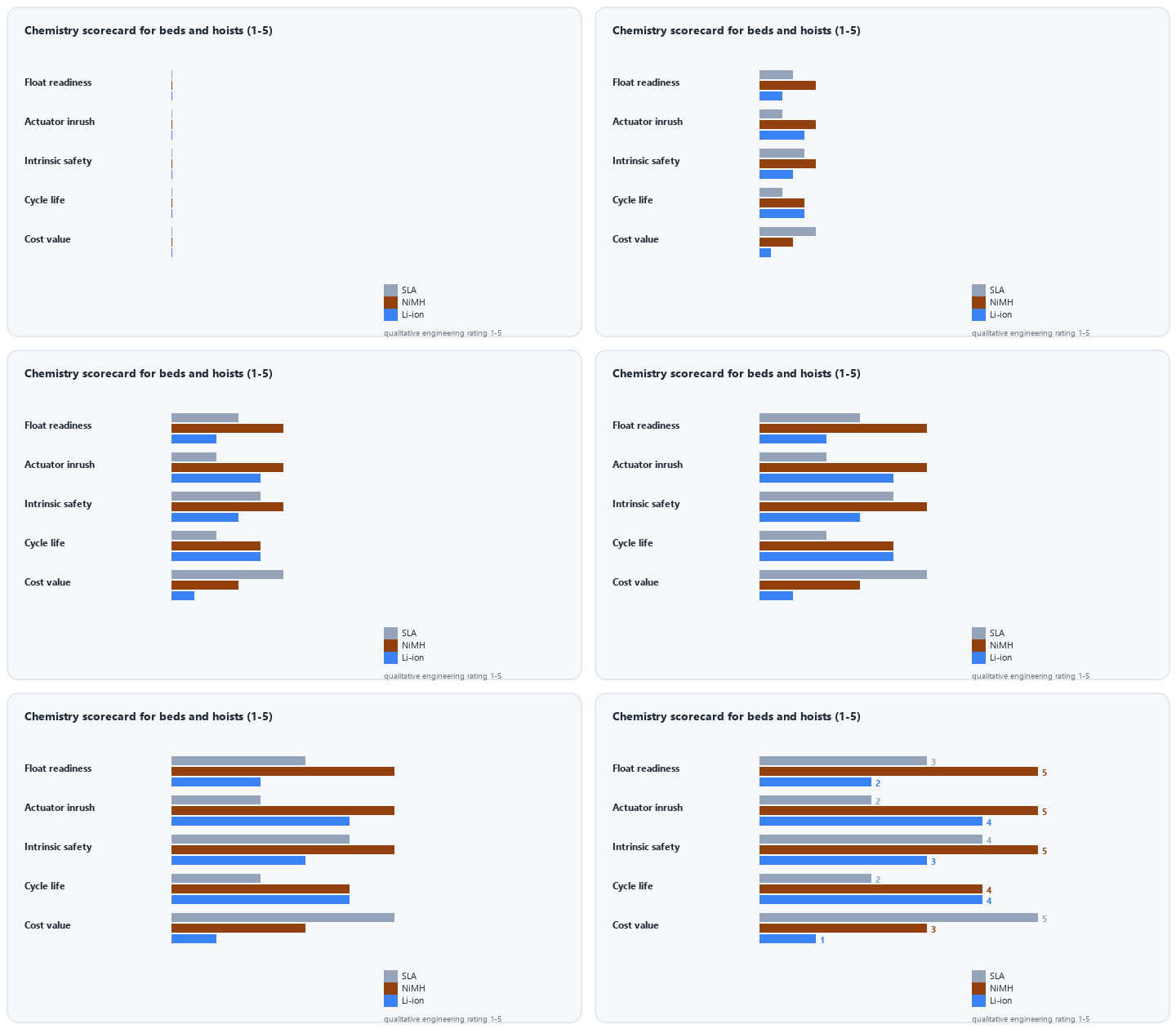
Sealed lead-acid is cheap but heavy, sags badly under actuator inrush and degrades fast when left partially discharged — a poor fit for a device that floats for months then must deliver instantly. Lithium-ion is light but needs a BMS and careful charge control in a device that spends its life docked at full state of charge, where lithium ages fastest. NiMH occupies the proven middle and is already the incumbent in mainstream hoists: 26.4 V 2.6 Ah NiMH packs in 24 V-class mobile hoists, 14.4 V 2.6 Ah packs in portable lifts, with a published life around 500 charge cycles, simple -ΔV charge termination, intrinsic aqueous safety and tolerance of the float-at-ready pattern. For beds, whose backup packs are rarely exercised but must work without warning, low-self-discharge NiMH is particularly apt.
Bed control boxes run on 24–29 V DC rails (one clinical bed specifies 29 V DC constant backup; another a 24 VDC 10 A pack), which maps to 20–24 NiMH cells in series; portable hoists use 12–14.4 V rails (10–12 cells). Series count is validated at the worst corner: maximum patient load, an aged pack, simultaneous actuator moves — the rail must stay above the actuator controller's cut-off through the raise inrush, or the bed stops mid-movement precisely when a carer needs it.
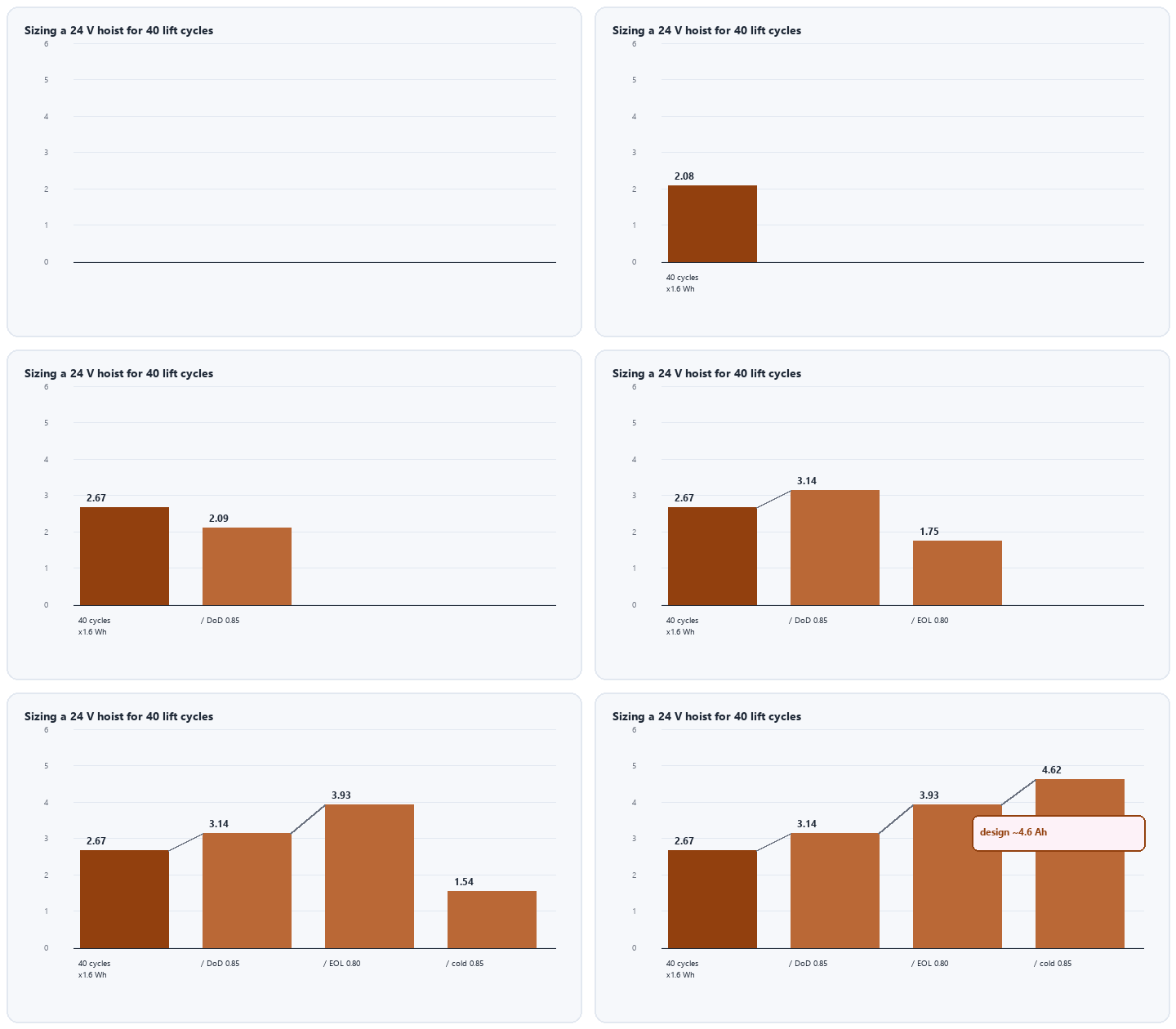
Work from the physical duty. Suppose one full raise of a 175 kg patient through the actuator stroke takes 20 seconds at an average 12 A on a 24 V rail: one cycle (raise plus lower) draws on the order of 24 V × 12 A × 20 s ≈ 1.6 Wh raise energy, plus lowering and control overhead. Forty required cycles therefore demand roughly 65–80 Wh before derating — about 2.7–3.3 Ah at 24 V, which matches the 2.6 Ah packs found in commercial hoists once duty assumptions are compared. Applying depth-of-discharge (0.85), end-of-life fade (0.8) and a low-temperature margin (0.85) raises the design figure, and explains the gap between a datasheet's "40 cycles when new" and the engineering target.
Actuator packs are built for surge and vibration: cells matched by internal resistance, welded nickel busbars rated for the 10 A-class raise current, flexible links for a moving chassis, and thermistors for charge supervision. Docked charging suits NiMH — constant current with -ΔV/temperature termination followed by maintenance current keeps a bed or hoist ready indefinitely, and an 8–10 hour overnight top-up is entirely compatible with ward routine.
Weijiang Power manufactures high-rate NiMH cells and custom 12/24/26.4 V bed and hoist packs: resistance-matched welded cells, float-ready charging, NTC protection and IEC 62133-1/UN 38.3 documentation. Send your actuator trace, safe-lowering requirement and cycle target and we will size the pack accordingly.


